The new Dylan video, for Thunder On The Mountain, is out:
Friday, December 08, 2006


Wednesday, December 06, 2006
Movie Roundup: Say It Ain't So, Rafael Edition
 Some more movie thoughts as I try to catch up with the big backlog of movies I've managed to build up while holding back the tears caused by the rumored Rafael Soriano for Horacio Ramirez trade. That's the wrong Ramirez, dumbass!
Yi Yi - Recently released in a beautiful Criterion DVD, Edward Yang's novelistic film of a family in contemporary Taiwan is warm and humanistic where the very similar Short Cuts is cynical and misanthropic. Each member of the family has their own storyline: the father tries to bring some honor and art to the business he co-owns while his partners play games with the sole goal of making money, and he meets up with his first love, a woman he hasn't seen in 30 years; the teenage daughter falls in love for the first time; the mother has a nervous breakdown and goes away for awhile; the young son gets in trouble at school and likes taking picture of the backs of people's heads; the grandmother falls into a coma after the film's opening wedding scene. A massive and profound film, one of the highlights of the great New Asian Cinema. The #4 film of 2000.
House Of Usher - The first of the Roger Corman Edgar Allen Poe adaptations starring Vincent Price. It's not nearly as successful as Masque Of The Red Death, in pretty much every way. The non-Price acting is pretty terrible, especially by Mark Damon, who plays the young man who finds himself caught up in the incestual/necrophiliac horrors of the Usher family. The ultra-low budget shows is the cheesy staginess of the production, whereas Masque had the benefit of using sets leftover from the big budget Becket. Still, Corman has a distinctive style and a good eye for color, and Price is always fun to watch. The #14 film of 1960.
The Prestige - The latest Christopher Nolan film is also the second magic-themed movie of the season (I haven't seen The Illusionist). Hugh Jackman and Christian Bale star as feuding magicians, who spend some period of years trying to top each other's tricks to humiliate and revenge themselves on each other. The omnipresent Scarlett Johansson shows up as an alternating love interest, Michael Caine plays an older mentor-magician and David Bowie's nearly unrecognizable as the inventor Nikola Tesla. Aside from a creditable amount of period detail, the film isn't all that much to look at, and the story suffers from the fundamental flaw of all trick movies: once you figure out the trick, the movie's not nearly as interesting. The unique problem this trick film has is that the audience figures everything out long before the characters themselves do, making the last 30 minutes or so nearly unbearable.
 Vampyr - Carl Theodor Dreyer's classic horror film (his follow up to The Passion Of Joan Of Arc) relies almost entirely on light and shadow to create as sense of eerie terror unmatched by any but the very best examples of the genre. A young man (Julien West) comes to a creepy village and has a night filled with horrific visions of very odd things about town. Eventually, it's discovered that there are vampires about after a girl falls ill. The only way to stop them is to drive an enormous stake through the heart of the lead vampire in her crypt. West is pretty bad in the lead role, but acting is a very minor part of this film. The print I saw, on TCM, was pretty terrible, with Gothic lettered subtitles taking up the whole bottom half of the screen. I've now seen five Dreyer films, and they're all great:
1. The Passion Of Joan Of Arc
2. Day Of Wrath
3. Vampyr
4. Ordet
5. Gertrud
Les Mistons and Antoine & Colette - Two short films by François Truffaut. Les Mistons is from 1957, two years before the New Wave hit it big with the Truffaut-scripted Breathless. It follows a group of delinquent boys as they torment a young couple in love (Gérard and Bernadette) over the course of a summer. At 17 minutes long, it's a slight but interesting film, famous mostly for the icky sequence in which the boys sniff Bernadette's bicycle seat. Eww. The #12 film of 1957.
Antoine & Colette is part of the anthology film Love At Twenty, and a continuation of the autobiographical Antoine Doinel series Truffaut began with his debut film, The 400 Blows. Jean-Pierre Léaud reprises his role as Antoine, now a young adult with a job and no annoying parental units. He meets Colette, falls in love, takes her to concerts, even moves into the apartment across the street from her, but can't ever manage to escape the friend ghetto. I haven't seen any of the later Doinel movies, but I understand he becomes more successful at the whole romance thing. The #16 film of 1962.
Faster, Pussycat! Kill! Kill! - Russ Meyer's camp classic about a gang of three evil strippers who torment a young girl, kill her boyfriend and become caught up in a creepy family's power struggles. The opening half hour, when the gang meets the square couple and have a nice friendly car race is by far the best part of the film. After that, the high intensity pitch of the film degenerates into a campy weirdness. There are some cool sequence in the rest of the film (a battle between a giant manly man and a car in particular), but it's that first half hour that makes the film worth watching. The #9 film of 1965.
 Killer's Kiss - Stanley Kubrick's first feature film, it has all the trademarks of a first film, good and bad. The plot is conventional B-noir, a boxer on his way out of town stops to save the hooker next door being tormented by one of her clients. The low-budget is largely hidden by Kubrick's masterful camera work and the stylization of the noir mise-en-scène, and the no-name actors are surprisingly effective. Like many a first film, it's very show offy, as Kubrick tries every trick he can think of to show what a great director he can be: expressive shadows, deep focus, showy camera movements, off-kilter camera angles, you name it, and this film's got it. Especially notable is a long shot of a rooftop case where the hero runs far into the background and loops back to the camera, the space elongated by the telephoto lens stretching the rooftop into and endless desert. With this, I've now seen all of Kubrick's features:
1. Dr. Strangelove
2. 2001
3. A Clockwork Orange
4. The Shining
5. Paths Of Glory
6. Eyes Wide Shut
7. Killer's Kiss
8. The Killer
9. Full Metal Jacket
10. Barry Lyndon
11. Spartacus
12. Lolita
Adam's Rib -Reportedly the best of the Katherine Hepburn - Spencer Tracy films, though I've only seen the mediocre Guess Who's Coming To Dinner and The pretty good Woman Of The Year. Tracy and Hepburn play married lawyers on opposite sides of a case in which a young wife shoots her husband when she catches him with another woman. The case metastasizes into a rumination on the merits of feminism, and quite nearly ends more than one marriage. Judy Holliday is terrific as the would-be murderer. Especially notable is a very long-take scene in which Hepburn talks to her client for the first time. Director George Cukor holds the two actresses in a two shot, at opposite sides of the frame and separated by a table for the entire sequence. The film also stars Tom Ewell (The Seven-Year Itch) as the unfaithful husband and Jean Hagen (Singin' In The Rain) as the other woman.
 I Walked With A Zombie - The second of Jacques Tourneur's horror films for producer Val Lewton is apparently a voodoo version of Jane Eyre. Since I'm totally Brontë-ignorant, I can't say anything about that, but this is a superb noir-horror film. A young nurse comes to a small Caribbean island and becomes the object of conflict between the two white brothers who dominate the island. She's there to take care of the wife of one of them, who the other one was in love with as well and who may or may not be a zombie. A zombie in the voodoo sense, not quite in the George Romero, must eat brain sense. Like in the previous Lewton-Tourneur collaboration, the great Cat People, the horror is more a function of psychology expressed through light, shadow, camera movement and general eerieness of mise-en-scène that the shock and gore of modern examples of the genre.
The Leopard Man - The third Lewton-Tourneur film is a lot less successful than either of the previous two. Playing like a straight version of Bringing Up Baby, a hungry leopard is on the loose in a small New Mexican town and manages to kill a couple girls. The question is: who let the cat out? Not as interesting psychologically or visually as its predecessors, it still has some great moments, specifically the first cat attack (cattack?) and the finale set during a creepy holiday celebrating imperialist massacre, complete with black robes and masks.
Seven Men From Now - The first of the low-budget Westerns directed by Budd Boetticher and starring Randolph Scott, and also the first one I've seen. Scott plays an ex-sheriff on a quest to kill the seven men who held up a bank and (accidentally) killed his wife. Along the way he helps a young married pioneer couple travel across the country (out-manlying the husband, naturally) and meets a couple of outlaws, led by Lee Marvin, playing his specialty: a cagey amoral nihilist. Psychologically complex in it's study of revenge, the film would make a great double-feature with The Searchers. Shot in an existentialist Technicolor, with larger than life men struggling against vast, terrible landscapes. It's too bad more Boetticher films aren't available.
.jpg) Goodbye, Dragon Inn - A run-down movie theatre showing King Hu's kung fu classic Dragon Inn is the setting for this very slow film by Taiwanese director Tsai Ming-liang. There's no dialogue at all until about halfway through the film, instead there are a series of long shots of the few moviegoers watching (or more specifically not-watching) the movie, along with the box office attendant making her lunch, eating it, and limping her way very slowly around the theatre. None of the patrons seem especially interested in watching the movie; we spend a lot of time following around a young man looking to pick up a guy, any guy he can find and being totally unsuccessful. In the weirdest sequence of the film, he wanders through a backstage maze, walking past dozens of the apparent ghosts of all the random encounters in the theatre's past. the films always teeters on the edge of boredom, but never quite falls off. Instead, it works as a loving tribute to the movie theatre culture, a lot more interesting than the vastly overrated Cinema Paradiso, for sure. The #4 film of 2003.
Goodbye, Dragon Inn - A run-down movie theatre showing King Hu's kung fu classic Dragon Inn is the setting for this very slow film by Taiwanese director Tsai Ming-liang. There's no dialogue at all until about halfway through the film, instead there are a series of long shots of the few moviegoers watching (or more specifically not-watching) the movie, along with the box office attendant making her lunch, eating it, and limping her way very slowly around the theatre. None of the patrons seem especially interested in watching the movie; we spend a lot of time following around a young man looking to pick up a guy, any guy he can find and being totally unsuccessful. In the weirdest sequence of the film, he wanders through a backstage maze, walking past dozens of the apparent ghosts of all the random encounters in the theatre's past. the films always teeters on the edge of boredom, but never quite falls off. Instead, it works as a loving tribute to the movie theatre culture, a lot more interesting than the vastly overrated Cinema Paradiso, for sure. The #4 film of 2003.
Tuesday, December 05, 2006
Movie Roundup: Sátántangó Hangover Edition
 Just about done getting over my cold, but still trying to recover from Sunday's trip to see a very big movie. here's some thoughts while trying not to refresh USS Mariner every five minutes to see if the Mariners have done anything at the Winter Meetings yet (please can I have Manny Ramirez for Christmas?)
April Story - The first film I've seen from director Shunji Iwai, but it won't be the last. Takako Matsu plays a young girl (Uzuki) from Hokkaido who goes off to college in Tokyo. She moves into an apartment, meets her classmates, joins the fly-fishing club, goes book shopping, watches a movie and falls in love. That's about it for the film's 67 minute running time. Uzuki regularly gets into situations which would, in a lesser film, be played for horror are disturbing "realism" but Iwai always chooses the romantic option instead (much like Miranda July did in Me & You & Everyone We Know). It's beautifully shot in a rather soft focus hand-held style, with what appears to be some kind of filter create a white glow throughout the film (that could just be the focus and lighting, though). Simple (in the best sense) and perfectly charming, but may cause the heads of the cynical to explode with rage. The #5 film of 1998.
Written On The Wind - Classic Douglas Sirk melodrama starring Rock Hudson, Lauren Bacall, Robert Stack and Dorothy Malone. Stack (looking weirdly like Sean Penn) plays an alcoholic heir to an oil tycoon, Malone's his sister who's in love with Hudson, his annoyingly perfect best friend. Stack and Hudson meet Bacall and both fall in love with her. She marries Stack, but his drinking and jealousy of his friend soon cause everything to fall apart. There's some fights, some crying, a mysterious pregnancy and amazing audio-only flashback (terrifically acted by Malone) all told in Sirk's sweeping, hyperbolic style. The #4 film of 1956.
 7 Women - John Ford's last fiction film is about a small mission in Northern China in 1935. The mission's threatened by a Mongol bandit on the warpath and its quiet conservative life is disrupted by the arrival of Anne Bancroft, a doctor who bears a striking resemblance (in attitude and dress) to Katherine Hepburn. Above all, a visual experience in the manner of the very best Ford films, it's surprisingly short, so the women don't become as well-defined as in, say, Seven Samurai, instead the film is more a relaxed examination of the interactions between types. Relaxed in the way that only an old, great director can make a film. The #5 film of 1966.
Mary Of Scotland - Katherine Hepburn stars as the eponymous Queen of Scots in yet another Ford film, this from 1936. Fredric March displays his customary, uniquely elm-like approach to acting as Mary's boyfriend and ideal of Scottish manliness the Earl of Bothwell. The plot is standard modified for Hollywood historical epic, with Elizabeth I villainized and Mary idealized, concealing a not so subtle anti-feminist rant as Elizabeth symbolizes the ruthless career gal while Mary's a mother and a woman in love. Hepburn's performance is able to overcome that for the most part, but the film's really only interesting as an example of Ford's growth as a filmmaker, as he experiments with expressive shadows, low camera angles (lots of ceilings) and purposeful zooms, visual experiments which would pay off in the late 30s-early 40s with Young Mr. Lincoln, Stagecoach, The Long Voyage Home and How Green Was My Valley.
The Fountain - I've decided I can't really discuss it without giving away too many spoilers, so suffice it to say at this point that I liked it alright. It wasn't great, nor particularly profound (or rather, original), but I wouldn't call it pretentious either. I appreciate the sincerity and ambition behind it, and while I don't think the film is totally successful, I admire Aranovsky's effort. Visually it was somewhat interesting, but not especially beautiful, though that opinion could change with further study. In particular Aranovsky does a lot of repetition and variation on certain shots, where the similarities and differences convey thematic meanings, but that'd take more than one viewing for me to sort out. Both Jackman and Weisz were pretty good, which I've never thought of either of them before. It's actually grown on me in the couple weeks since I watched it, but I still don't think it's as great as it wants to be.
 Masque Of The Red Death - Reportedly the best of Roger Corman's Vincent Price Poe adaptations, this film plays like a vibrantly colored B-horror version of The Seventh Seal. Sometime in Medieval Italy, a young innocent redhead is kidnapped and held prisoner by the local Count (Price). Turns out the Count and all his court are Satanists, and there's a plague raging in the town outside (part of the eponymous Red Death). The Count tries to corrupt the young girl with lengthy philosophical discussions and demonstrations of the correctness of his evil religion, while her boyfriend tries to rescue her and big parties rage through the castle. Dizzying, expressionistic and always weird. The #9 film of 1964.
 Sátántangó - How could I possibly capsulize a film like this? Béla Tarr's 7 1/2 hour epic certainly lived up to the hype, it was even better than I expected. Believe it or not, despite its extreme length, the remarkable length of the takes (there's only 230 or so shots in the whole film, about the same as two minutes of a Tony Scott film), and the subject matter (decollectivizing a small village in post-communist Hungary) the film is never boring. Either the camera or the actors are almost always in motion, and when the shot is static, the effect is so striking that you can't look away. It runs the whole range of human emotion and experience: horror, love, awe, happiness, confusion, friendship, hope, depression, resignation and drunkenness. The film's also shockingly funny, in a mordant, Eastern European sort of way.

More poetic than other novelistic films I've seen (Marcel Carné's Children Of Paradise, Gone With The Wind, Reds, Birth Of A Nation, and so on), often there's very little happening plot wise, but amazing things occurring visually (movements across landscapes, amazing super-winds, a seemingly endless dance-sequence that's as exhausting for the audience as it is for the dancers).
It'll be out on DVD in North America soon, but theatrically is the way to see it if you get the chance. Above all, don't break it up into separate segments. It's meant to be seen all at once and works perfectly that way. Spreading it across a couple of days would only ruin its effect by destroying the considerable momentum the film builds up. Take a day and watch it, you won't regret it. The #3 film of 1994, behind only Chungking Express and Pulp Fiction.
Sunday, December 03, 2006
Peter Griffin On Film Criticism
I was going to have something more substantive this weekend, but I caught a cold instead. And now I'm off to spend the rest of the day watching Béla Tarr's 450 minute classic chronicle of life in a small Hungarian village after the collapse of Soviet collectivism, Sátántangó. It's never been screened theatrically in Seattle, and probably never will be again. Hopefully it won't be too insistent.
Tuesday, November 28, 2006
Wednesday, November 22, 2006
Movie Roundup: Sacrificial Turkey Edition
 As we as a nation prepare to execute millions of large flightless birds in honor of our gods, some thoughts on a few recently seen movies.
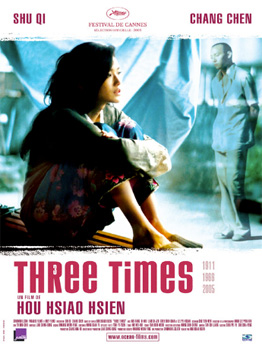
Three Times - The latest Hou Hsiao-hsien is three love stories set in three different time periods with the same two actors in each story (Shu Qi, from Millenium Mambo and Chang Chen from Crouching Tiger, Hidden Dragon). The first, concerning a soldier looking for the girl he loves, a pool hall attendant, is set in 1966 and the mood and quirky humor of the story is reminiscent of Wong Kar-wai's trilogy of period films (Days Of Being Wild especially). The second section, set in 1911, concerns a young revolutionary and the prostitute who loves him and hopes to marry him. The whole section is in the style of a silent movie, complete with intertitles, but shot in a vivid color, dominated by purple, brown and gray. The third sequence is set in the present, with the man as a photographer, in love with a singer despite the both of them having girlfriends of their own. Like all Hou films, it's beautiful, with long, floating takes from a fixed point of view (the camera pans but does not swirl or track). It's a small film with an epic's worth of meanings: the changing definitions and codes and styles of love, the transformations in the way men and women relate to each other, the history of Taiwan over the last 100 years, both politically and culturally, and most interestingly (to me) how in the 21st century the past is just another aspect of the present. In the future the past will be ever present. The #2 film of 2005, behind only The New World.
A Night To Remember - This 1958 telling of the story of the sinking of the Titanic was amply ripped off in The Biggest Movie Ever. It manages to avoid all the bad parts about James Cameron's epic (the generic love story, Paxton and Zane), while telling the always moving, if exceedingly familiar story. Director Roy Ward Baker (who?) shoots in a stark, realistic black and white style that, combined with the relatively non-existent histrionics makes this the stereotypically stiff-upper lipped British reaction to disaster, right down to the ending noting the socially beneficial responses to the tragedy. The #5 film of 1958.
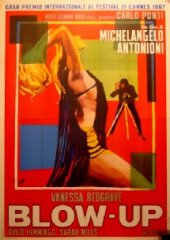 Blowup - Michelangelo Antonioni's Swinging London mystery about a photographer who thinks he may have accidentally captured a murder on film while shooting in a park one afternoon. He tries to investigate the crime, but keeps getting distracted by the temptations of life in the mid-60s: hot clubs, sex with multiple wanna-be models, Vanessa Redgrave, the need to buy a giant wooden propeller, mimes, and so on. David Hemmings plays the photographer with the same blank, bored cool that one would expect in a film by the director of L'Aventura, the classic icy ode to ennui. I enjoyed this film a lot more than that one, the ideas are the same, but Blowup is more playful. The #4 film of 1966.
The Tao Of Steve - Entertaining, if typical, Gen X indie comedy about a fat slacker with a quirky philosophy and his adventures in search of true love. Donal Logue is very good as the slacker, and the setting (Santa Fe, New Mexico) is new and interesting, and there are some clever lines, but the supporting performances are below par, even for an indie. A slight, but watchable film. The #21 movie of 2000.
 The Lost Patrol - Another in the John Ford marathon, this 1934 film stars Victor McLaglen (The Quiet Man, She Wore A Yellow Ribbon) as the leader of a troop of British soldiers in Mesopotamia, surrounded at an oasis by unseen Arabs who snipe them off one by one. The unseen nature of the enemy eventually drives the men nuts. The music, by Max Steiner, is more than a little reminiscent of the score he'd write eight years later for Casablanca. There's some nice imagery, a shirtless McLaglan mowing down a line of Arabs with a machine gun seems right out of Rambo III, and some good supporting performances (including a histrionic Boris Karloff). An entertaining enough little film, barely over an hour long, but it doesn't really compare to Ford's greatest films (unfair, I know).
The Hurricane - Part of the six movie John Ford marathon on TCM yesterday, five I've which I hadn't seen and tivo'd. It's hurt by weak, ethnically inappropriate, and mediocre, lead actors (Jon Hall and Dorthy Lamour), but gets fine supporting performances from Thomas Mitchell and Raymond Massey. Massey plays the French colonial administrator of a small South Seas Island who unbendingly enforces the law against an unjustly convicted native (a hero to his people, played by Jon Hall). After repeated attmpts at escaoe from prison, Hall finally makes his way home, only to see the entire island wiped away by a massive hurricane. The special effects in the final sequence are amazing for any time, but especially for 1937. There are even echoes of themes Ford would develop fully in The Searchers (and certainly the mileu is something he'd return to in his late light classic Donovan's Reef). Mary Astor (from The Maltese Falcon) is largely wasted in a supporting role as Massey's wife.
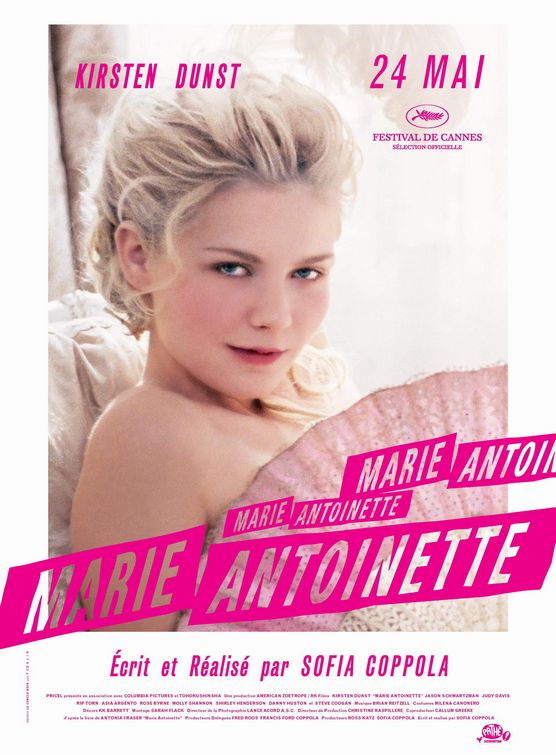 Marie Antoinette - Some notes on the most controversial film of the year so far:
I thought Kirsten Dunst was very good, but I've a weakness for her. Steve Coogan, Danny Huston and Judy Davis are largely wasted. I liked Jason Schwartzman a lot. His Louis XVI is benign, incompetent and amiably clueless and surprisingly understated for Schwartzman, who's usually pretty broad.
Cinematographically, it was pretty but not all that interesting. I think the film is really overrated visually. It has a lot in common with the similarly overrated Memoirs Of A Geisha. Both films are full of shots of beautiful things shot in a not particularly interesting or innovative style. The costume design was great. the set decoration was ridiculously baroque, I'm not sure if it's historically accurate or over-the-top or both.
I thought the parallels in the film between the fads Marie Antoinette takes up and contemporary fads of upper class women were potentially very clever (the sequence in Petit Trianon with the herbs and the lambs was hilarious), but I'm unsure if Coppola's aware of that irony. I'm not sure if the film is satire or tragedy, but I don't think it can be both.
 I liked the improvisational vignette style through the first two-thirds of the film, but as the events of the film became more serious, I found the lack of historical context really annoying. There's no explanation for why the French people turn against her. We just experience it as a series of seemingly random horrible things happening to her. I don't believe that Marie Antoinette was as ignorant of the larger context of her life and society as this film is. The fact that we have glimpses (only glimpses) of her larger awareness confounds me. If the point is to show a girl adrift in a world she doesn't understand, why create scenes where she understands her world perfectly? Radically divorced from social context, the film is not about Marie Antoinette, but about Sofia Coppola. And I really don't care how difficult Sofia Coppola thinks her life of privilege is. Try as I might, I really don't think there's anything to this film other than "aww, look at the poor little rich girl." At least she's cute, I guess.
Much like in Lost In Translation, Coppola totally lost it in the last third of the film. She has good taste in the directors she likes to copy (Hou and Wong in particular are obvious stylistic influences), but she has yet to make a truly meaningful statement out of all that style. Without any real meaning, it's all just a pose, it's all fashion.
Tuesday, November 21, 2006
Robert Altman, RIP
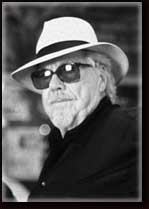 Robert Altman died today at age 81. He was one of the great American directors of the last 40 years, creating dozens of idiosyncratic, personal films. He was most well-known for his long takes of large ensemble casts, as well as his habit of overlapping dialogue, with multiple characters talking at the same time, but mixed in such a way that we hear exactly what he wants us to hear. After his first big hit with MASH, he proceeded to make a number of classic films, and wound his way in and out of critical and popular favor, always retaining his independence.
I've seen a few Altman films, but not as many as I want to. Here's what I've seen:
1. Nashville
2. MASH
3. The Player
4. McCabe & Mrs. Miller
5. Short Cuts
6. Vincent & Theo
7. Popeye
8. Gosford Park
And a top 5 that I need to see:
1. The Long Goodbye
2. A Prairie Home Companion
3. Secret Honor
4. Buffalo Bill & The Indians
5. The Company
Tuesday, November 14, 2006
Holding Out For A Hero
 Reading moviecitynews on Zhang Yimou's upcoming Curse Of The Golden Flower, I found a link to this review of Zhang's Hero by Armond White. White's an interesting writer, but I've always seen him as more provocateur than critic, and the bulk of his glowing review is what you'd expect: it looks great, Zhang's an artist unlike those Hollywood hacks, a dig at Tarantino, praise for Christopher Doyle, some blatant ignorance of Chinese film, but two paragraphs contain the germ of an idea that resolves the tension I've always had with the film, namely its seeming pro-fascist political statement (that violent abuses by the state against its people are justified in the name of national unity).
White writes:
Hero is an exercise in what academics call narrativity. Nameless represents the anonymous handing-down of legend, and when his stories are matched by the emperor's own counter-myths, the film grows into an elaborate—hell, magnificent—demonstration of pop-culture communication. Zhang shows how stories that are eagerly received can also be improved upon—for reasons that are either political, emotional or for sheer creative inspiration.
. . . .
Zhang and Doyle turn love and war—ecstasy and tragedy—into surreal extravagance. It's not decorative, it's volatile. And they keep the marvels coming: a showdown amidst golden leaves that change color as if they possessed mood, a resting place on a glistening lake that suggests an Asian Valhalla, as well as the psychic lunarscapes in Wong Kar Wai's Ashes of Time.
These settings seem heightened (if not created) by each character's longing. Every one of Jet Li's tales as Nameless situates a scene in a personal motive, yet, soon, the same imagery is doomed by mankind's intrigues. No other Jet Li film I've seen has been this sophisticated about national myth. Zhang explores the moral complexity of history.
This conception of the film, as a series of competing narratives, each one topping the other in order to create a foundational national myth transforms the film into an investigation into and even an attack on the kind of authoritarianism I (and Senses Of Cinema) saw in the film. Instead of valorizing Jet Li's assassin sacrificing himself to the murderous Qin Emperor on the altar of national unity, Zhang's instead showing how the state creates such myths in order to consolidate its own power over the people. It's therefore a critique of both the state and the large majority of patriotic propaganda films. Such an attack is consistent with Zhang's other films and his reputation as a Mainland Chinese filmmaker who's worked for 30 years subverting and obliquely critiquing that country's bizarre form of government from within.
So, a Yay! and a Thanks! to Armond White!
Addendum: I just watched Hero again, and I think this interpretation works. Not only is Zhang critiquing the use of narrative to support the state, but he's more specifically attacking the whole idea of Taoist/Buddhist "passivity" in the face of authoritarianism. Tony Leung's Broken Sword is a Taoist who achieves a kind of enlightenment through calligraphy and renounces fighting in the name of peace. He convinces Jet Li's Nameless of the correctness of his position: that fighting is pointless and counterproductive to the unity of "Our Land". Nameless spares the Emperor when the Emperor claims to understand the secret in Broken Sword's calligraphy ("The ultimate ideal is when the sword disappears altogether. The warrior embraces all around him. The desire to kill no longer exists. Only peace remains.") In the end, though, the Emperor has Nameless executed (in a scathing attack on the anti-individualist, anti-humanist hive mentality of bureaucracy, when dozens of his advisors, all speaking in one voices, demand Nameless be killed). Thus the Taoist renunciation accomplishes only the death of the "hero" and the elevation of the murderous tyrant.
Sunday, November 12, 2006
Borat Eat Brain, Must Play Video Game
 Not much time for Not Blogging lately, what with crazy Borat business sucking all the life out of me at work (the movie's great, by the way. Number 3 on the year so far, after Miami Vice and The Departed.) In addition, i went out and bought the new Final fantasy game, beginning my twice yearly video game binge, so i haven't been watching any movies at all.
Some interesting stuff going on however. There was the election, of course. And let me sum up my reaction this way: YIPPEE! But I'm still concerned for the future. I anticipate a Clinton-Obama ticket that will probably lose to McCain-Jeb or something. Could be worse, I guess.
David Bordwell's got his book on Yasujiro Ozu, Ozu and The Poetics Of Cinema available for download here. I haven't read it yet, but Bordwell's legit so I imagine it's pretty good. And Ozu's always fascinating.
Mike's got an interesting post at Vinyl Is Heavy about a Wired magazine article on Atheism and sad little anti-prayer atheist groups contrasted with lively Protestant gatherings. It's an interesting subject, but ultimately my opinion on the whole atheism vs. theism debate is that it doesn't make a bit of difference whether or not God exists. I have my doubts, but I don't particularly care. Nor do I really have any interesting in convincing people that what they choose to believe is wrong. People look for all kinds of things to give their lives meaning, to experience some combination of community and transcendence: church, sports, art, atheism groups, whatever. If it works for them, I'm happy for them. Though it's easy to see, without looking too hard, that not much is really sacred.
All religions are made up of a morality and a mythology. One doesn't need to believe the myth to agree with the moral: you can have the Golden Rule without the Trinity. The mythologies of various religions are fascinating though, not just in a psychological Carl Jung/Joseph Campbell sense, but also because all of Western Art (music, literature, you name it.) is founded on Judeo-Christian mythology (same with Eastern Art and Religion, as far as I can tell as well). Whether we believe in it or not, much of the way we see and understand the world is shaped by religion and the discourses surrounding it. And the world is richer for having those myths and metaphors. You don't need to be Catholic to appreciate Martin Scorsese, but you can't understand his work without understanding Catholicism. So this is the other problem with atheism as a doctrine: a world without religion is much less interesting, we lose many of our most versatile and powerful metaphors. Cinema would be a much poorer place without The Seventh Seal, The Passion Of Jeanne D'Arc, Andrei Rublev, The Last Temptation Of Christ, Au Hasard Balthasar, The Mission and on and on and on.
The problem with religion is not people who believe the myth and the morality, but with people who believe the myth and ignore the morality. This is the basic error in fundamentalist thinking, Christian, Jewish and Muslim. It's caused, not by religion itself, but by our woeful ability to think critically about ourselves and our world. Bertrand Russell, and many other atheists blame religion itself for this, as organized religion (they assert) discourages doubt and questioning in father of received wisdom and dogma. I can't disagree with that, but it's a chicken and egg thing. The fact is that less dogmatic religions have just as much trouble with authoritarianism and lack of self-examination as Western nations have seems to be evidence that the problem lies not with God but with ourselves. It's that longing for community again, making it so easy for us to sublimate our own judgment to the instruction of charismatic leaders. Is it religion that makes us ripe for exploitation by authoritarians, or our need for community that makes us accept so willingly whatever we're told religion demands of us? I don't know, and neither did Russell or any other group, prayer or anti-prayer.
Friday, November 03, 2006
Wednesday, November 01, 2006
Movie Roundup: All Saints' Day Edition
 Trying to catch up on what's been a busy month of movie watching and working. So many movies, so little time to not blog.
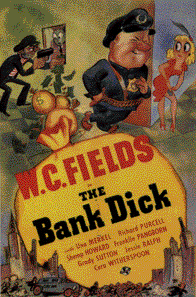
The Bank Dick - My first W. C. Fields experience is a happy one with this quite hilarious misanthropic fantasy about an old drunk who accidentally foils a bank robbery and gets a job out of it. Complications ensue when he encourages his prospective son-in-law to embezzle some money in order to invest it on the eve of the bank examiner's inspection. The supporting actors are rather poor, barely above the level of props for Fields's brilliant combination of laziness, solipsism, alcohol and spite. Definitely a subject for further research.
Nothing Sacred - Fredric March and Carole Lombard star in this screwball comedy about a reporter writing a series of stories on a young girl dying from radium poisoning. Turns out the girl isn't dying after all, but just pretending to get a free trip to New York. Girl and reporter fall in love and madcap hilarity ensues. Lombard's terrific, as usual, but March is way too stiff and dull for this genre, lacking the fluidity of Cary Grant or Jimmy Stewart. It's an entertaining enough film, though shot in an early version of Technicolor that looks way too green.
Ball Of Fire - This Howard Hawks screwball comedy stars Gary Cooper as the head of an eccentric group of brainy encyclopedists made up of some of the best character actors of the 30s and 40s. their little world is disrupted when they venture into the streets to further their knowledge of contemporary slang (for an encyclopedia entry) and come home with floozy Barbara Stanwyck. Stanwyck's on the run from the cops who want her to testify against her boyfriend (Dana Andrews, a gangster). Cooper, of course, falls for the girl, apparently the first on of them those guys have seen in decades. It's not as anarchic or brilliant as Hawks's best comedies (Bringing Up Baby, His Girl Friday), but it's a fun film with fine performances all around, especially by Richard Haydn (the guy who was the voice of the caterpillar in Disney's Alice In Wonderland) as one of the wistful old professors. Even Gary Cooper managed to impress me as an actual human being, a first for him.
 Smiles Of A Summer Night - This early Ingmar Bergman film is a little overlabeled as a comedy. It is instead a member of the upper-class partner switching genre, who's most illustrious example is Jean Renoir's masterpiece The Rules Of The Game. This film plays as a pale imitation of that one, with less characters the love geometry is less complicated, and the film lacks all the social commentary of the other, with it's intersecting relationships between the various French classes on the eve of World War II and it's complex nostalgia for a more civilized time. Bergman's film, by comparison, is set at the turn of the century almost entirely among the upper class. There is a sequence with a maid and a butler in the final third of the film that to some extent works as a comparison to the more complicated lives of the rich characters, but it feels tacked on and simplistic (if not condescending) relative to Renoir's film.
Anyway, aside from not being as good as one of the five greatest films of all-time, this is a fine film, easily the most pleasant and charming Bergman I've seen. the performances are all quite good, though I was surprised not to find Max von Sydow, who i believe is in every other Swedish film I've ever seen.
Imitation Of Life - I've finally seen my first Douglas Sirk film, despite the fact that I managed to write a short paper on this film in college. It's a melodrama of the ungrateful daughter variety, with some very impressive examinations of racism, passing and white liberal hypocrisy. Lana turner plays the mom who wants to be an actress and Juanita Moore plays her maid. The two ladies also have daughters (Saundra Dee plays the grown-up white girl and Susan Kohner the grown-up black girl who wishes she wasn't), and Turner has a love interest, the treelike John Gavin (Psycho, Spartacus). Like all of Sirk's classics, the drama is uber-melo and the acting is heightened to (past?) the point of hysteria and the colors are vibrant and Techni. There's a lot going on with Sirk and I really need to see more of his films and watch them a lot more closely. The number 11 film of 1959, a truly terrific year for film.
 Ordet - Another Carl Theodor Dreyer classic, this time revolving around a small farming family (one father, three sons) and their religious squabble with a neighboring family as a son from one family wants to marry the daughter of another. Complicating matters is that one of the other sons is crazy (thinks he's Jesus) and the third has a wonderful wife who faces death while giving birth one night. The film's generally described as "a profound examination of faith and what it means to believe in God" or something, and that's true. But the film succeeds not because of the depth of its philosophy, but because of the realism and convincing drama of its scenario and mise en scène (long shots, slow editing, theatrical, yet convincing performances, especially by the actors who play the crazy son and the father).
Bride Of The Monster - Another Ed Wood classic, though it lacks the terrifying autobiography and just plain weirdness of Glen Or Glenda or the let's put on a show comic bravado of Plan 9 From Outer Space. Bela Lugosi plays a mad scientist who creates radioactive monsters and kidnaps a young female journalist (Loretta King) with the help of his professional wrestling henchman Tor Johnson. The acting is terrible, the props as cheap as they come and the story generic as any sci-fi film of the 50s. It's Wood's most successful film in this Hollywood sense, but the least interesting of his work I've seen.
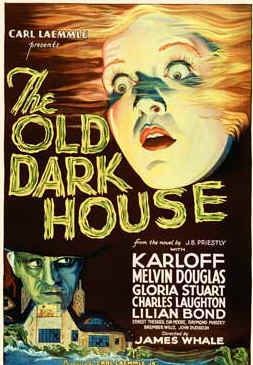 The Old Dark House - Refugees from a driving rainstorm find shelter in a creepy house populated by a demented family in this 1932 James Whale creepfest starring Boris Karloff and Charles Laughton. Even more effectively than in Frankenstein, Whale adapts the shadowy darkness of the silent German Expressionist classics to the early sound era, a time when most Hollywood directors had seemingly forgotten everything that had been learned about the creation of mood, atmosphere and meaning through image over the prior 20 years in the struggle to capture the novelty of actors actually talking (By 1932, this phase of film was thankfully on it's way out, thanks to Whale, Howard Hawks (Scarface) and Busby Berkeley). In this sense, this film is a prototype of the cheap, atmospheric horror films Val Lewton and Jacques Tourneur would make in the 40s (Cat People, The Leopard Man, I Walked With A Zombie), which were all shadows and psychology and without much in the way of violence. This film, though, does end with a lengthy fight scene and conflagration as somebody lets the crazy brother out of his cell in the basement and he terrorizes the women, beats up the men and sets the whole dark house on fire.
Beyond A Reasonable Doubt - Dana Andrews plays a reporter who conspires with his future father-in-law to frame himself for a murder in order to prove the lunacy of applying the death penalty based on circumstantial evidence. unfortunately for him, but not too surprising, is when the old guy dies, there's no one around to prove his actual innocence. Director Fritz Lang reportedly hated this film, and it shows in the perfunctory job he did directing it. It has none of the aggressive style and outrage of his classic anti-lynching film Fury, to say nothing of the experimentality of his noir classics (M, Metropolis, The Big Heat, etc). This is Lang going through the motions, and it works as a kind of entertainment. Like an episode of Murder, She Wrote. With Joan Fontaine as the unfortunate fiancée.
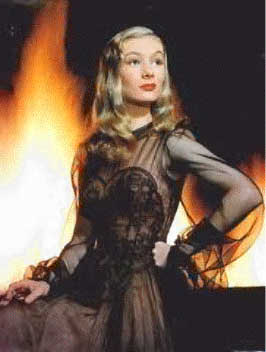 I Married A Witch - French director René Clair is responsible for some classic films which I've never seen (Le Million, À Nous La Liberté), but I have seen this charmingly titled Hollywood film from 1942. The adorable Veronica Lake plays the eponymous bride, who, along with her witch relatives is trapped in a tree in Puritan New England only to be released and unleashed on the family that captured her 300 years later, where, through the unfortunate application of a love spell, she falls in love with the descendent of the man who tormented her originally. The emergence of Lake and her father from their tree prison as wisps of smoke that float across the land and find themselves watching a party of swells from inside beer bottles is lyrical and lovely, while in keeping with the absurd spirit of the film. It's just the best of many fine sequences from Clair, a director who I'll now have to seek out more from (ah, the ever-expanding queue). Lake is wonderful as the witch, and not just because she wears a succession of quite clingy dresses. She has the ethereality necessary for playing a wisp of smoke, and the comic ability to pull off the screwballity of the comedy. Fredric March, on the other hand, is just as stiff as he was in Nothing Sacred five years earlier.
Wednesday, October 25, 2006
Movies Of The Year: 1957
 Back to the list, while watching the Russ Meyer exploitation classic Faster, Pussycat Kill! Kill!, which Rob Zombie had the audacity to claim is not camp. Pfft, Rob Zombie. Anyway, check out The Big List for previous results, explanations and disclaimers.
13. Old Yeller - The classic Disney film of a boy and his dog notable mainly for scarring millions of children with it's sappy act of doggy euthanasia. It seems like there was a lot more death in the Disney movies of the mid-20th century than they'd allow now, but I'd have to watch some of the "family" films out today to know for sure, and that is not going to happen.
12. Sayonara - Costume melodrama of the most mediocre variety about a group of American servicemen who fall in love with Japanese women during the Korean War. Notable as the film with the first Oscar-winning performance by an Asian actor (Myoshi Umecki as Red Buttons' girl), but that's about it. The cast also includes Marlon Brando, Ricardo Montalbon and James Garner. Adapted from a james Michener novel and directed by Joshua Logan, the man responsible for the Eastwood/Marvin musical classic Paint Your Wagon.
11. An Affair To Remember - Leo McCarey's remake of his own 1939 film Love Affair stars Deborah Kerr and Cary grant as a couple who meet on a cruise and fall in love, despite each being engaged to other people. After the cruise, they agree to meet six months later at the top of the Empire State Building. A classic story, decisively influential on many a film, including Sleepless In Seattle (#61, 1993) and Before Sunrise (#9, 1995), the film itself is quiet and classically styled, with an elegance and earnestness that's been lacking in romantic films for decades. Kerr and grant are quite good, as they always are; McCarey was a comedy writer/director going back to the early 20s, but the only other movies of his I've seen are The Awful Truth and Duck Soup.
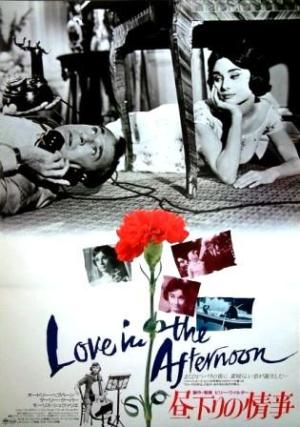 10. Love In The Afternoon - One of the mellower Billy Wilder romantic comedies, starring Audrey Hepburn as a young girl out to seduce the way too old Gary Cooper. Hepburn's the Veronica Marsesque daughter of PI Maurice Chevalier, who's be hired to prove that Cooper, a notorious womanizer has been sleeping with his clients wife. Hepburn falls in love with Cooper and pretends to be a slutty socialite to make him jealous. Hepburn's as great as ever, but Cooper's not only too old (creepy!), but neither comic nor romantic enough to be the star of a romantic comedy.
9. 12 Angry Men - Sidney Lumet's classic film debut about a jury's deliberations in a murder case has a terrific, all-star cast, featuring great performances from Henry Fonda, Lee J. Cobb, along with character actors Martn Balsam, E. G. Marshall, Jack Klugman, Jack Warden and Ed Begley. Based on a play, this film could very easily have fallen into the category of "filmed theater", but Lumet manages to keep things moving and interesting despite the confined space and static, talky, nature of the story. One of those films that everyone probably saw in junior high school, but is still actually pretty good.
8. Bridge On The River Kwai - Alec Guinness stars in this David Lean epic about British soldiers in a Japanese POW camp during World War 2 who are forced to build the eponymous bridge. The battle of wills between Guinness (as the leader of the British) and Sessue Hayakawa (as the camp commandant) is wonderful, with great performances from both, especially Guinness as his character descends from hard-nosed, stiff-lipped ideal of British manliness to lunatic obsessive. The film is quite nearly ruined, unfortunately by a terrible performance (from a terribly written character) by William Holden as an American soldier in the camp who escape and leads the return to liberate the camp. In no way is anything involving Holden in this film any good at all. His character is written and acted seemingly as a parody of what the British think Americans are like (compare Holden here to Steve McQueen in The Great Escape). It's really unfortunate, considering the rest of the film is as good as anything Lean ever did.
7. Witness For The Prosecution - Billy Wilder's adaptation of Agatha Christie's courtroom drama hasn't the least relation to any kind of realistic depiction of a murder trial, but thanks to two great actors (and one terrible one) it's a quite funny and entertaining genre piece. Charles Laughton (perhaps the ugliest, and greatest, actor in film history) stars as the defense attorney for Tyrone Power (who's terrible), who has been accused of killing a middle-aged widow. Marlene Dietrich plays the defendant's wife, the title character. Elsa Lanchester (Laughton's real-life wife) also stars.
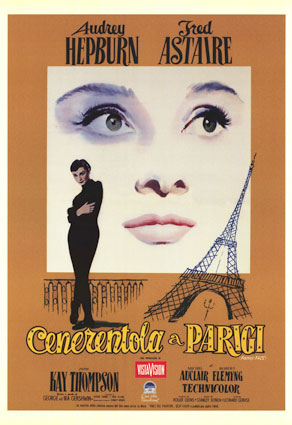 6. Funny Face - One of my favorite musicals, Audrey Hepburn stars in this Stanley Donen film as a bohemian bookworm who gets whisked away to Paris to be a fashion model for a famous photographer played by Fred Astaire. The music's almost all Gershwin, which always helps in a musical and there's a great supporting performance from Kay Thompson, the inventor of the word "pizzaz," as the editor of a fashion magazine. Astaire's way too old for Hepburn, and the dancing doesn't especially stand out (though there's an interesting overthetop Beat parody Hepburn performs in a club), at least relative to some of Donen's other films like Singin' In The Rain or Royal Wedding.
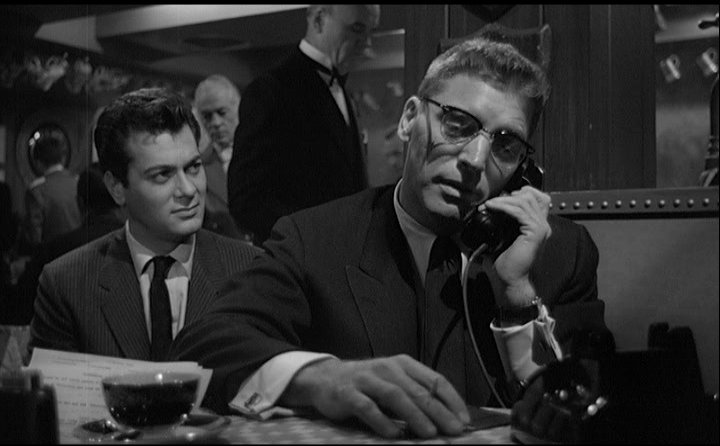
5. The Sweet Smell Of Success - Acid indictment of the nihilistic amorality of the entertainment industry starring Tony Curtis in his best role as a small-time press agent (Sidney Falco) trying to ingratiate himself with big-time gossip columnist Burt Lancaster (J. J. Hunsecker), in one of his good performances. Directed in a crisply dark noir style by Alexander Mackendrick (The Ladykillers), with cinematography by James Wong Howe. The screenplay's even better than the visual look of the film (high praise), written by playwright Clifford Odets and the great Ernest Lehman (Sabrina, North By Northwest).
4. Paths Of Glory - One of my favorite, and one of the least misanthropist, of all of Stanley Kubrick's films is this courtroom drama in which Kirk Douglas tries to save three men from being executed for cowardice in the wake of a disastrous and idiotic offensive during World War I. Kubrick directs in a crisp, deep focus black and white, and his depiction of the battle, a long tracking shot of the horrors of trench warfare, is one of the most powerful scenes he ever shot. All the actors are quite good, but Douglas especially stands out as the idealistic warrior-attorney. The film's final scene, that of a young girl singing beautifully before a barroom full of rapt soldiers is the most romantic and humanist thing Kubrick ever did. And he even went and married the girl.
3. Nights Of Cabiria - Giulietta Masina gives one of the all-time great performances as the classic hooker with a heart of gold in this picaresque Federico Fellini film. There are three main sections in the film: an encounter with a celebrity, a trip with a massive crowd to a church for some religious festival, and an apparent discovery of true love. Each time Cabiria's hope and faith is raised, beaten down and yet somehow reemerges and she goes on to her next adventure. I suppose this makes her the ideal existentialist hero, trudging on with good humor despite all the horrible things that seem to unavoidably keep happening to her.
 2. The Seventh Seal - Ingmar Bergman's masterpiece of life and Death in the Middle Ages stars Max von Sydow as a returning Crusader who meets Death on a beach and challenges him to a game of chess in one of the cinema's better metaphors for life. While the game is going on, the Knight gets to continue his journey. Along the way he meets a young family of traveling actors. Together, they all travel through the countryside in the wake of the Black Plague, where they meet crazy villagers, flagellant priests and various other medieval types. A beautifully, even profoundly filmed existentialist meditation of the nature and meaning of life and death, with one of the great final shots in all of cinema. One of my favorite films and deservedly regarded as one of the essential classics of film history.
 1. Throne Of Blood - Akira Kurosawa's expressionist adaptation of Macbeth stars Toshiro Mifune as the tragic general who allows his (and his wife's) ambition to lead him into betrayal, murder and insanity. Much like he later did with Ran (#1, 1985), Kurosawa doesn't bother to adapt the language of the Shakespeare play into Japanese, but instead focuses on translating the raw emotions of the works into cinematic equivalents. Mifune is perfect here as the noble warrior who allows himself to be manipulated by a witch in the woods and his own scheming wife and then descends into a demented, elemental paranoia. Kurosawa modeled the look of the film on the Noh theater tradition (like he did with Ran and Kagemusha, #8, 1980), with mask-like faces, a slow paces and a hauntingly eerie soundtrack. The dark, dark, look of the film clearly has a lot in common with Orson Welles's own film of Macbeth, but only Kurosawa could pull off a seen as lyrical and horrifically beautiful as the final battle sequence, when an entire forest comes alive to attack Mifune, his own soldiers turn against him and dozens, if not hundreds, of arrows are actually shot at the clearly terrified actor. the cast includes Takeshi Shimura, Minoru Chiaki and Isuzu Yamada who is very good as the Lady Macbeth character, if not quite as purely evil as Mieko Harada's Lady Kaede in Ran. It doesn't get as much notice as Kurosawa's other masterpieces (let alone the Bergman film it beats out on this list) but it's as powerful as anything he ever made.
32 Unseen films this year might be some kind of a record, if I kept track of such things. There's a couple Samuel Fuller films, a Boetticher, a Bergman, a Chaplin, a Tashlin and an Ozu, among many others.
Wild Strawberies
The Tall T
Run Of The Arrow
Tokyo Twilight
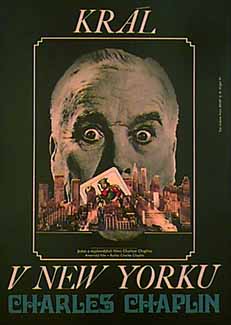
A King In New York
3:10 To Yuma
Forty Guns
The Lower Depths
Will Success Spoil Rock Hunter?
The Enemy Bleow
A Face In The Crowd
Gunfight At The OK Corral
Desk Set
Night Of The Demon
Jailhouse Rock
The Cranes Are Flying
Heaven Knows, Mr. Allison
Aparajito
The Three Faces Of Eve
Peyton Place
Pal Joey
The Pajama Game
Raintree Country
The Wings Of Eagles
I Was A Teenage Werewolf
The Sun Also Rises
Fear Strikes Out
White Nights
Bitter Victory
La Casa Del Angel
Kiss
Les Maitres Fous
Tuesday, October 24, 2006
Movie Roundup: Travelogue Edition
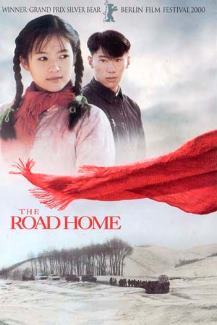 The Road Home - Favorite Actress Zhang Ziyi's debut film is this Zhang Yimou film. Beginning in grainy black and white, a young man returns to his small village on the occasion of his father's death. As he and his mother make funeral arrangements, we get the story of his parents' relationship. Zhang plays the mother as a young peasant girl who becomes enamored (kind of obsessed, really) with the local teacher. It's a love story told in small gestures and quiet rituals, filmed in the kind of beautifully tasteful color cinematography you expect (and I love) from Zhang Yimou. Speaking of Zhang and Zhang, Senses Of Cinema has an interesting, comprehensive and somewhat confusing article on House Of Flying Daggers, Hero and Crouching Tiger, Hidden Dragon. I think he's too hard (and literal) in his criticism of Crouching Tiger (nihilism), but his complaints about Hero (fascism) are basically the same as mine. The #8 film of 1999.
Meet Me In St. Louis - Vincente Minelli's musical ode to turn of the century small town America stars Judy Garland and Margaret O'Brien as two of several daughters of an uppers class STL family that may be moving to New York. It's a very competent and largely inoffensive film, but aside from a number or two (Have Yourself A Merry Little Christmas, The Trolly Song) it's not anything that I find particularly interesting. I'm generally a fan of dancing, as opposed to singing musicals, so that's part of the problem (I like dancing musicals for the same reason I like kung fu films, by the way). But really, the film's just so archetypal that it's impossible to watch it today with fresh eyes.
The Heart Of The World - This short film by Winnipeg-based director Guy Maddin is one of the most vibrant, energetic and fascinating six minutes in the history of film. It's an entire sci-fi epic on fast-forward, told in a winking homage to the montage-heavy Russian silent films. A girl, a scientist is in love with two brothers, one an actor (playing Jesus is the Passion Play), the other an undertaker. When she discovers that the world's about to end (have a heart attack), the world falls into chaos and she falls for an evil industrialist. But she comes to her senses and saves the world. Any summary, certainly this one, is inadequate to describe this amazing film, the #3 film of 2000. Best to just watch it for yourself:
Archangel - Speaking of Guy Maddin, the only feature film of his I've seen is this 1990 film, a perplexing mix of Silent Cinema and campy/arty sci-fi horror. Set at the end of World War I, or so, the film revolves around a number of people with memory problems, who can't seem to remember who they or anyone else is. As imdb effectively summarizes: "(one-legged Lt. John) Boles loves Iris, who is dead, and meets Veronkha, whom he mistakes for Iris. But Veronkha is already married to Philbin, who forgets he is married to Veronkha. Veronkha thinks Boles is Philbin. . . ." There's also a peasant family, with a cowardly father and a mother who falls in love with the aforementioned Lt. Boles. When the family is attacked in the middle of the night by cannibalistic Bolsheviks, the father saves the son's life with the greatest intertitle I've ever seen in a film: "Strangled! By an intestine!" The #6 film of 1990.
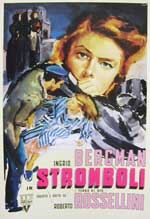 Stromboli - My first Roberto Rossellini film stars Ingrid Bergman as a WW2 refugee who marries a young Italian man to escape the refugee camp. The young man takes her to his home island of Stromboli, a conservative little village dominated by an active volcano. The volcano metaphor isn't exactly subtle, but neither is Bergman's performance as she becomes increasingly hysterical in her struggle against the provincialism of small-town life. But somehow, teetering on the edge of camp, it manages to be sincere and moving. I definitely need to see more Rossellini: I've had Open City on the tivo for months now. . . .
Queen Christina - Greta Garbo playing a cross-dressing Swedish monarch? Yee-haw! This potentially great film gets off to a great start, with Garbo's Queen picking up a guy in a bar, this first third of the film falling somewhere between Henry V and The Crying Game. The rest of the film, unfortunately, becomes a rather dull story of class differences keeping the poor Queen and her lover apart. Competently directed by Rouben Mamoulian, with John Gilbert ineffective as the Queen's boyfriend, but Garbo's as amazing as ever.
The Departed - Martin Scorsese's latest film is an adaptation of the very good Hong Kong film Infernal Affairs (#6, 2002). It's quite different from the earlier film, both in length (much longer), tone (much funnier), and style (much more freewheeling, especially in the performances). It's Scorsese's best film in a long time, since Kundun at least. Matt Damon plays a gangster who goes undercover as a cop and Leonardo DiCaprio plays a cop who goes undercover as a gangster. Both are drawn to the head gangster of South Boston, played by Jack Nicholson (in a performance that starts restrained and becomes weirder and more "Jack" as the film's sense of paranoid hysteria increases), and both have legit cops as potential father figures: DiCaprio has the ideal good father in Martin Sheen, Damon has amoral (and hilarious) company man Alec Baldwin, in a less frightening variation on his great Glengarry Glen Ross performance. And both Damon and DiCaprio (in a sharp break from the original) fall in love with a psychiatrist, played adequately by Vera Farmiga.

The film it most reminds me of is Hitchcock's North By Northwest. It has the same kind of combination of dark humor (especially from Baldwin and Marky Mark Wahlberg's ill-tempered cop), suspense and hidden potential depth. It's much more entertaining than the original, though (despite an overlong middle section of Leo coming unglued) without nearly the depth of character or emotion. Any depth The Departed does have is therefore, like most of Hitchcock, not emotional but intellectual. In this way the two films are complementary instead of oppositional: I think they're both great and each is enhanced by the other.
Tuesday, October 17, 2006
Like Dylan In The Movies
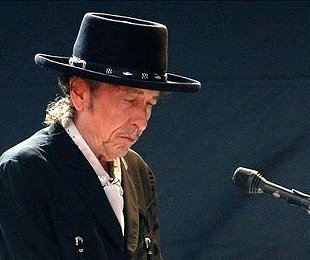 The wife and I went to see Bob Dylan at Key Arena last Friday night. The opening act, Kings Of Leon, was terrible. I didn't think that there were bands around today that wished they were Mother Love Bone, but apparently there are. The three non-singers in the band were at least competent musicians, though lacking in creativity. The singer, and whoever is the songwriter are pretty bad. they were a complete waste of time and a bizarre thing to see before a Dylan show.
Anyway, the Dylan part of the show was amazing, perhaps the best concert I've ever seen. I generally say Nirvana in January of 94 or the first time I saw Dylan (June 95) when asked what the best concert I've ever seen was. But this one may have topped them both. My expectations were pretty low for this show. The wife and I saw him a year and a half ago and his voice was in pretty poor shape and he just looked tired and bored on the stage. He was off to the side of the stage and didn't seem his old Dylan self.
Well, that was far from the case this time around. His voice was in top form and while he's still playing keyboards, he threw in some harmonica and some hilarious old man dancing and pointing at the crowd. He was back to being the coolest person on the planet, a title he's held off and on for the last 40 years or so.
I managed to write down the setlist, so here's a short rundown of what transpired:
The show started with a very mellow, breezy version of Maggie's Farm. It's a common set opening for Dylan, but usually in an angry, rocking version. Instead, this , with it's heavy emphasis on Dylan's keyboards, sounded like a refugee of his 80s period. Second was a similarly keyboard heavy (but more conventional sounding) version of She Belongs To Me. Lonesome Day Blues was third, sounding much like it did on Love And Theft. A breezy version of Positively 4th Street, an angry song wrapped in a slow, wholesome melody that again emphasized the keyboards wrapped up the first section of the show: light, ethereal sounds disguising the true nature of the lyrics.
The highlight of last spring's Dylan show was a blues adaptation of It's Alright, Ma, one of Dylan's greatest, and most angry songs. He played the same version again here, but it was an order of magnitude better. The band was more violent and Dylan's delivery was more coherent. Next was a rather pedestrian version of Just Like A Woman, like the song itself, it was well done, but I'm just not a fan of it. Perhaps Woody Allen forever scarred me against it with Shelly Duvall's character in Annie Hall. A conventionally ricking version of Highway 61 Revisited was next, followed by When The Deal Goes Down, the first single from Modern Times, in an identical-to-the-album version.
Next up was the highlight of the show for me, and one of my all-time favorite concert moments ever (along with the acoustic set at the Nirvana show, and Dinosaur Jr explaining my life at age 17 to me at Lollapalooza), my all-time favorite song, Tangled Up In Blue (no, I'm not afraid to be obvious, as any TINAB reader should know by now). The bulk of the song was typical of a Dylan performance of the last decade or so (he sang the multiple pronoun version while altering the lyrics of the strip club episode, gotta take the good with the bad), but it ended with (IIRC) the second harmonica solo of the night. I don't recall Dylan playing harmonica at the last show, but this time each solo started out tentatively and then builded to a point when the full band comes in. In Tangled Up In Blue it was perfect: the whole band together, fully integrated into each other, the song and the audience (or at least, me). It was one of those transcendent moments you go to a concert (or movie) hoping to experience.
Next up was a decent, if traditional A Hard Rain's A-Gonna Fall. For me, though, nothing tops the rollicking Rolling Thunder version of this song on Live 1975. It's the one version where the song doesn't feel bloated or pretentious. Watching the River Flow followed, but I have to admit I didn't recognize it (despite putting it on a birthday mixtape for the wife just two days earlier) because of the radical bluesy reconfiguration Dylan gave it. It's a great song., a personal favorite much akin to John Lennon's Watching The Wheels. I'm also certain it was a theme song to something, TV show, movie, whatever, but I can't remember what it is.
 Next was a close-to-album version of Modern Times's Workingman's Blues #2, which brings up and interesting thing about the audience at Key arena that night. Yeah, they cheered quite loudly for the working man, but almost none of them were. They were almost entirely old and sold out. We were on the floor of the Arena, and it was dominated by folks in late middle age asking the people in front of them to sit down. Apparently those Ed Sullivan shows are wrong and in the 60s everyone sat politely at rock concerts. I even heard one guy claim that "John Cougar's version is better than Dylan's". Suffice it to say this elderly yokel was wearing an annoying vest. Anyway, the set closed with a rocking, if predictable version of Summer Days from Love And Theft.
There were three encores. First was Modern Times's opener Thunder On the Mountain. Played exactly as it appears on the album, Bob's apparently still thinking about Alicia Keyes. Next was Like A Rolling Stone, played fairly conventionally, notable mostly for the lighting effects. At the chorus's shout of "How does it feel?" the spotlights turned on the audience, essentially accusing them (us) of being the target of the song's accusation against the yuppies' ignorance of the plight of the poor. Considering the makeup of the audience, it was quite the accurate critique, not that any of them got it or anything. They'd all stand up and cheer when Dylan played the old favorites. Whenever he played a new song (three from the new album, 2 from Love And Theft) they'd sit down. Jackasses.
The show closed with an apocalyptic All Along The Watchtower, which, combined with the accusing Rolling Stone, and the angry It's Alright, Ma left me with the feeling that Dylan's one pissed off old man. Combined with his cooler than thou old man posing at the keyboards, and the positively ancient costuming of his band (grey suits and fedoras) he can't help but come off as a pissed off old man scolding his fans for their superficiality and ignorance. Same as he's been doing for 45 years. Same as it ever was.
Wednesday, October 11, 2006
Movie Roundup: Movie Mutations Edition
 Been reading a number of movie books lately. I reread Jonathan Rosenbaum's Movie Wars, much of which was quickly outdated by the DVD/Netflix phenomenon in the five years since it was written. I've been making my way through Phillip Lopate's Library Of America Anthology of American Film Critics, which has it's flaws but is still pretty interesting (in addition to it's having the first Manny Farber and Andrew Sarris I've been able to read). In the mail today came Movie Mutations, an anthology of essays on contemporary world cinema edited by Rosenbaum and Australian film critic Adrian Martin. Can't wait to read it.
Raise The Red Lantern - Period melodrama starring Gong Li in which she's the newest of four wives for a castle-dwelling fellow in 1920s China. Like every other Zhang Yimou movie I've seen, the film is beautiful: vibrant colors, with a very structured, composed mise-en-scène, which, combined with the length of the shots and the slow pace of the film effectively inspires a sense of restriction and entrapment. Whether this atmosphere is a subtle condemnation of life in totalitarian China or simply an evocation of the unfortunate circumstances the hero finds herself in is a matter of opinion. I think Zhang's a lot more ambivalent politically than his Western admirers like to think he is, but I haven't seen enough of his early films to say for sure. The #8 film of 1991.
The Black Dahlia - Brian DePalma's a hack. This mishmash of Hitchcock and noir and the true story of a grisly murder is an incoherent mess, both in terms of a nonsensical plot, absurd, motiveless characters and a visual style that's a nonsensical collection of shots from other, better movies. The Out Of The Past podcast (see the link in the sidebar) devoted their last episode to this travesty, and did an excellent job explaining the many ways it goes horribly wrong. It's part of DePalma's "style" to ripoff shots and scenes from other scenes and insert them willy-nilly into his own films, and the OOTP guys go into detail on how this radical decontextualization creates an incoherent mess of a film that can't possibly contain any actual meaning, at best, and at worst perverts the original meanings to DePalma's vaguely fascist (or misogynistic, if you like) purposes, as in the famous appropriation of the tumbling baby cart sequence in The Untouchables. Worth seeing for those who like train wrecks.
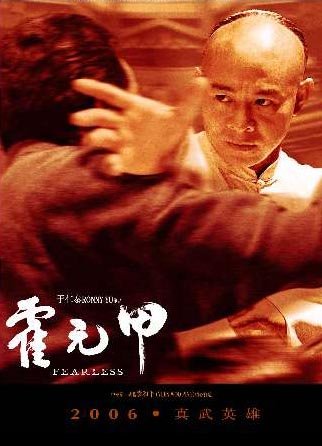 Fearless - In supposedly his last major role as a kung fu star, Jet Li reprises just about every other kung fu hero he's ever played in this mildly interesting film directed flashily by Ronny Yu (The Bride With White Hair). Li plays a cocky young man who experiences a tragedy that forces him to grow up. he retreats for a time and achieves some level of Taoist enlightenment, which he subsequently uses to make his kung fu even better, and then he defeats all his enemies, furthering the glory of his native people, in this case defeating a group of foreigners in a four on one martial arts contest. It's a fine film, well made with some great action sequences, but I prefer his earlier, funnier films.
Clash By Night - This Fritz Lang film has the title of a film noir, and it's a part of Warner's second film noir box set, but I don't think it's a film noir at all. It's a fairly conventional small-town melodrama type film, with a terrific cast and fine direction by the great Fritz Lang. Barbara Stanwick's a big city woman who comes home to small town Monteray, California. She marries a local lug Paul Douglas, but carries on an affair with the local movie theatre projectionist, Robert Ryan. Eventually, affairs are discovered and children are born and Stanwick's brother marries Marilyn Monroe, but aside for an unusually accepting treatment of infidelity for a studio-era Hollywood film, there wasn't a lot to interest me here. Lang's, of course, a great director, so it's likely I missed something somewhere along the way.
 Day Of Wrath - Over the last few months I've been trying to catch up on all the auteurs I missed out on in college. One of the most prominent of those is Carl Theodor Dreyer. Despite the fact that I took a whole class on Scandinavian film (taught by a respectable scholar in the field no less: she did the commentary for the Criterion edition of Bergman's The Virgin Spring) I'd never seen a Dreyer film until The Passion Of Jeanne D'Arc less than a year ago. That's his most famous (and probably best) film, and I next watched his last film, Gertrud, which is stylized to the point of difficulty, at least on first viewing, but still very interesting. Over the last couple weeks I've seen Day Of Wrath and Ordet, and two more Dreyer's are upcoming this month on TCM (Vampyr and Leaves From Satan's Book). Anyway, Day Of Wrath's a terrific film, a claustrophobic story of witches and infidelity set in 17th Century Denmark. The local minister sentences an old woman to death for witchcraft, then his own young wife (herself the daughter of a witch) seduces his son. Largely restricted to the minister's house, the film nonetheless finds a varied visual style, most obviously a motif of crosses which dominates the first half of the film. Quite possibly a perfect film.
Wild At Heart - I've never been a David Lynch fan, and I can't say this film changed my mind. At least it didn't actively annoy me like Dune or Blue Velvet managed to. Nicolas Cage and Laura Dern star as young lovers on the run in this twisted genre exercise that reaches for some level of parallel with The Wizard Of Oz. They're on the run from Dern's mother, who sends some bounty hunters after them, then thinks better of it, with over the top bloody consequences for everyone involved (certainly the mom in a ridiculous scene). It's a fun enough ride, and Lynch once again manages to ensnare a far greater cast than he deserves: Cage, Dern, Diane Ladd, Willem Defoe, Harry Dean Stanton, Isabella Rosselini, Cripsin Glover and Sherilyn Fenn. The #32 film of 1990.
Wednesday, October 04, 2006
Movies Of The Year: 1958
 With The Man Who Shot Liberty Valance (#3, 1962) on the TV and a nice martini having it's way with my psyche (and my typing), it's onto 1958, a year in which I've managed to miss almost all the highest repped films. Anyway, see The Big List for previous years and various disclaimers and methodologies.
9. Separate Tables - Perhaps the film most responsible for my irrational hatred of Burt Lancaster, this dull drawing room drama stars Lancaster, Deborah Kerr, David Niven (who won an Oscar) and Rita Hayworth as various residents of a vacation hotel who have a variety of tedious problems. It's based on a play, and it shows.
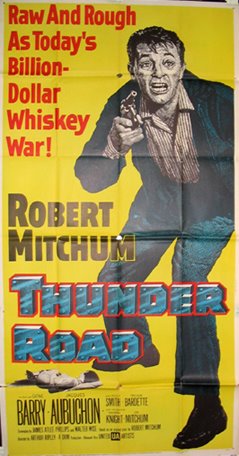
8. Thunder Road - Some kind of action film starring (and co-written by) Robert Mitchum about a vet who comes home and takes over the driving in the family moonshine business, the kind of business that led to the creation of NASCAR. I don't exactly see the charm in the film, I thought it was kind of dull and overwrought myself, but some folks consider it a classic. I like the Bruce Springsteen song a lot better ("You ain't a beauty, but, hey, you're alright" and so on).
7. Gigi - I'm the first to admit my ignorance of the wonders of Vincente Minelli. I recognize that there's something going on here, but I don't know what it is. I just watched Meet Me In St. Louis today, another Minelli musical whose charms completely escape me. One of the gaps in my film education I guess. Anyway, Gigi stars Leslie Caron as a young fin de siècle courtesan to be who charms the pants off a young cad about town. Maurice Chevalier provides the film's most memorable scene with his more than vaguely disturbing song "Thank Heaven For Little Girls."
6. The Legend Of Sleepy Hollow - Short Disney adaptation of the Washington Irving Story about a nerd chased by a Pumpkin-headed monstrosity because he somehow managed to charm the local hot chick. Good advice to the young and geeky, I think: stay away from the pretty girls or else you'll get yourself killed. Thanks, Uncle Walt.
5. The Left-Handed Gun - A young Paul Newman gives one of my favorite of his performances as a psychotic Billy The Kid in this Arthur Penn film based on a Gore Vidal play. The 1966 film Young Guns (#28) is basically an amalgamation of this and Sam Peckinpaugh's Pat Garrett & Billy The Kid (#6, 1973), set to a hopping 80s score. Newman's in full anti-hero mode as he exacts bloody revenge on the people who killed his English (read: gay) father figure. Penn plays up the serious psychosis in Billy, while Peckinpaugh went more for the charm. Young Guns, on the other hand, had Emilio Estavez.
 4. Vertigo - The consensus pick for the greatest of all Alfred Hitchcock films, a movie dangerously close to supplanting Citizen Kane from the #1 spot in the decennial Sight And Sound poll, but I've only got it rated the fourth best film of its year. James Stewart plays a detective afflicted with the eponymous acrophobia who becomes obsessed with a client who thinks her past life is trying to kill her. When she dies, he finds a girl who looks just like her and really goes nuts. Frankly, it's a film whose charm I understand but have never felt much of a connection with. Somewhere in the middle it loses me, and I can't exactly explain it. Partly it's Kim Novak, who I really think is terrible. I know she's supposed to be remote and robotic, but it's too much for me. I just can't care anything about her (either version) and thus find James Stewart's obsession with her to be rather inexplicable. It's a film I admire more than like, too cold and clinical for me to really care about.
 3. The Hidden Fortress - I may get my film geek card taken away for ranking this Kurosawa swashbuckler over Hitchcock's classic of perversity, but screw those freaks, this is my not a blog. Two peasants on the run from war get caught up with a general trying to smuggle a princess across the enemy border into safety. It's Kurosawa's first widescreen film, and he uses it to good effect with complex, detail-filled compositions that, combined with the space-flattening effects of his use of the telephoto lens create a vivid medieval tapestry and emphasizes the oppressiveness of the nature the main characters must traverse. The plot is a pure distillation of the adventure epic, but in the margins Kurosawa transcends the typical genre film and creates something truly interesting and entertaining, if never entirely original: the sheer greediness of the two peasants, their quarreling comic relief has been copied endlessly by lesser filmmakers (George Lucas most obviously), the transformation of the princess from haughty to fully human (done many times) elegantly reaches its climax in a powerful fire festival sequence that's somewhat clumsily referenced at the film's conclusion and the friendship and respect between Mifune and Susumu Fujita's enemy general (Fujita starred in Kurosawa's first film, Sanshiro Sugata, 15 years earlier), individuals on opposite sides of a war yet bound by a common class sense of honor and duty. Though there's a decent Criterion DVD of this, it really does need to be seen in a theatre for it to have it's full, populist entertainment effect.
2. Ivan The Terrible Part 2 - I wrote about this a couple weeks ago here. The second part of Sergei Eisenstein's planned trilogy about the first Tsar of Russia, this film was banned by Stalin (who felt its depiction of Ivan's use of a secret police to silence his political opponents was a bit too familiar) and not released until well after both Eisenstein and Stalin were dead. Abandoning his silent movie dialectical montage techniques, Eisenstein instead uses long takes, a distorted, artificial and grotesque mise-en-scène and acting styles to create a kind of feverish dream state, that only gets more bizarre halfway through the film when it all suddenly shifts from stark black and white to a vibrant bloody red pseudo-technicolor for a party sequence. Visually astonishing from start to finish, it is, it goes without saying, one of the minor crimes of the Stalin regime, but one of the great ones against film that Eisenstein never got a chance to finish his trilogy.
 1. Touch Of Evil - One of my all-time favorite films is Orson Welles ultimate film noir. The film is generally used to mark the end of the classic periods of films noir, and in the same way Unforgiven (#1, 1992) represents the carrying of the Western genre to it's most fundamental extreme, so Touch Of Evil is the ultimate noir both stylistically and thematically. The most recent version of the film, re-edited in 1998 along specifications laid out by Welles and ignored for 40 years, the disconcerting style of the film becomes much more clear. Much of what was changed was an increase in intercutting between the various plotlines involving newlyweds Janet Leigh and her Mexican lawyer husband Charlton Heston ("He don't look Mexican"). The new version follows neither the original (which played each sequence to it's conclusion then moved to the next) nor the rhythms of standard police procedural intercutting, but instead leave everything slightly off-balance, all of which occurs after the famous opening shot, a long track from one border town to another. In other words, the continuity of the world is disrupted and thrown off balance by the explosion that gets the plot of the film rolling. Similarly, the framing, dialogue and casting are also off-kilter, bizarre (and hilarious) Marlene Dietrich playing a Mexican prostitute/fortune teller with a German accent, the aforementioned Charlton Heston as a Mexican symbol of the impotence, squareness and just plain lameness of the law, Dennis Weaver as the world's weirdest hotel clerk, and Orson Welles at his most grotesque as the fat drunk sheriff who likes to beat confessions out of the suspects he's framed. The film is endlessly fascinating thematically as a meditation on the nature of police work ("it should only be easy in a police state"). It's currently #5 on my ymdb Top 20 films list (link in the sidebar) and I could write pages and pages about it. "He was some kind of a man. What does it matter what you say about people?" Indeed.
A whole lot of Unseen movies from this year, Including films by Tati, Ozu, Malle and Wajda that I'd really like to see sometime soon. The version of Brothers Karamozov below stars none other than William Shatner as Alyosha, one of the greatest crimes a film ever perpetrated on a novel.
Mon Oncle
Elevator To The Gallows
I Want To Live!
Equinox Flower
Party Girl
Ajantrik
Ashes And Diamonds
Curse Of The Demon
Man Of The West
Murder By Contract
Rock-a-bye Baby
Une Simple Histoire
The Tarnished Angels
A Time To Love And A Time To Die
Wind Across The Everglades
The Magician
Cat On A Hot Tin Roof
The Blob
A Night To Remember
The Fly
Fiend Without A Face
The Quiet American
The Naked & The Dead
Run Silent, Run Deep
South Pacific
The Defiant Ones
Bonjour Tristesse
The Brothers Karamozov
Subscribe to:
Posts (Atom)