Sunday, August 05, 2012

Old Movie List Discovered: Provokes Mild Embarrassment, Rethinking of Life


A while back I rescued from the hard drive of a now 20 year old computer, a list of the Best Movies Ever that I put together back in the summer of 1998.  That was the year I moved to Seattle (a couple blocks away from the Best Video Store in the World) and watching movies became the thing I did for school and work instead of the thing I did instead of school or work.  The list is reflective of the lack of viewing options I had as a young moviegoer in the cinema wasteland that was Spokane in the mid-90s, possibly (hopefully) the last time in history that a person's geographic location was a major limiting factor in what films they could see.  It also shows the influence of my pre-film studies reading: I'd spent the previous year and a half reading every movie book I could get my hands on, working my way up from Leonard Maltin, Roger Ebert and VideoHound's Golden Movie Retriever to Pauline Kael, François Truffaut and Jonathan Rosenbaum, along with scholarly books on Orson Welles (James Naremore), Akira Kurosawa (Donald Richie), Alfred Hitchcock (Truffaut as well as David Sterritt) and Martin Scorsese (Lawrence Friedman).


So, like all lists, it's a snapshot of a particular person at a particular time.  And also like all lists, it's notable as much for its omissions as for what it includes.  But still, looking back on it fourteen years later, I can help but be a little surprised at it.  Not because there are films ranked highly that I no longer think are any good (though there are a couple of slight embarrassments), but rather at how many of the films that I ranked highly then continue to occupy the top spots on the lists I've made more recently (I have four here at The End: a Top 150 from 2008, a Top 250 from 2009, a Top 600 from 2010 and a Top 1000 from 2011).  Of course that shouldn't be a surprise, as these are many of my favorite films, and one of the ways I define that inescapably vague term "favorite film" is by how long I've lived with them, not simply in terms of rewatchability (though several of these I've seen many, many times), but in how over time these particular movies have come to define what I think cinema is, what it should be, and what it can be.


With the release of the latest Sight & Sound poll this week, and Labor Day Weekend, the time of year I traditionally create a new Best of All-Time, fast approaching, lists have been on my mind.  Every year, my Best Lists have gotten bigger and bigger, culminating last year, when I spent a month or so creating a Top 1000 list, an inherently ridiculous task that was as fun as it is absurd.  I could keep that trend going, with ever longer and more tedious lists (1500!, 2000!, 5000!), or I could try something new.  And so I'm going to follow the advice of the great Kristin Thompson, who in a post at her blog in March on the topic of Best Of lists suggested abandoning the repetitive reassertions of the canon that inevitably result from consensus-based polls like Sight & Sound's in favor an approach more like that of the National Film Registry:
I think this business of polls and lists for the greatest films of all times would be much more interesting if each film could only appear once. Having gained the honor of being on the list, each title could be retired, and a whole new set concocted ten years later. The point of such lists, if there is one, is presumably to introduce people who are interested in good films to new ones they may not have seen or even known about.
And so I'm going to create a The End of Cinema Hall of Fame, inducting a few movies each year and writing about them along the way.  Sometime soon, I'll name 25 films, then spend the next year writing about them every two weeks or so until it's time to name the next class.  I'm not going to rank them, instead I'll just go along with the assumption that all Hall of Famers are equally canonical.  I haven't decided what, if any, criteria I'm going to use: just naming my Top 25 films as of that moment or maybe using a quota system (Best film noir, Best Western, Best French movie, etc) or perhaps some kind of a combination of the two.  Rest assured, it'll be arbitrary.


As a warm-up, here's my recently unearthed1998 Top 200 Movies of All-Time List:


1   Manhattan
2   Casablanca
3   Seven Samurai
4   Annie Hall
5   Citizen Kane
6   Miller's Crossing
7   Ran
8   Singin' in the Rain
9   The Birds
10   Mean Streets
11   Lawrence of Arabia
12   The Rules of the Game
13   The Empire Strikes Back
14   Psycho
15   L. A. Story
16   Dr. Strangelove, or How I Learned to Stop Worrying and Love the Bomb
17   The Philadelphia Story
18   The Godfather Part II
19   It's a Wonderful Life
20   Goodfellas
21   The Wizard of Oz
22   Rashomon
23   Do the Right Thing
24   On the Waterfront
25   Taxi Driver
26   Three Colors: Blue
27   The Lion in Winter
28   The Mission (Joffe)
29   The Godfather
30   Close Encounters of the 3rd Kind
31   Star Wars
32   Pulp Fiction
33   Kiss Me Deadly
34   North by Northwest
35   The Manchurian Candidate
36   Duck Soup
37   American Graffiti
38   Six Degrees of Separation
39   Harvey
40   Throne of Blood
41   The Big Sleep
42   Touch of Evil
43   Schindler's List
44   Amadeus
45   Sanjuro
46   8 1/2
47   Raging Bull
48   The Red Shoes
49   Children of Paradise
50   Crimes and Misdemeanors


51   Kagemusha
52   Dangerous Liaisons
53   The English Patient
54   Quiz Show
55   Unforgiven
56   Hannah and Her Sisters
57   Jaws
58   Platoon
59   Patton
60   The Seachers
61   Boogie Nights
62   Broadcast News
63   Out of the Past
64   Vertigo
65   Blood Simple
66   Seven
67   All About Eve
68   Henry V (Branagh)
69   The Seventh Seal
70   The Graduate
71   Suspicion
72   The Third Man
73   Stranger than Paradise
74   The Spy Who Came in from the Cold
75   The Last of the Mohicans (Mann)
76   Bringing Up Baby
77   The Player
78   Bugsy
79   Trainspotting
80   Yojimbo
81   Rebecca
82   The Maltese Falcon
83   The Shawshank Redemption
84   Brief Encounter
85   Bonnie and Clyde
86   Fantasia
87   Silence of the Lambs
88   JFK
89   Raiders of the Lost Ark
90   Zelig
91   The Men Who Tread on the Tiger's Tail
92   Fargo
93   Mr. Smith Goes to Washington
94   Sleeping Beauty
95   The Age of Innocence
96   Reservoir Dogs
97   High Plains Drifter
98   A Clockwork Orange
99   Laura
100   The Outlaw Josey Wales


101   Stagecoach
102   Day for Night
103   Ugetsu
104   Wings of Desire
105   Swingers
106   The Lady from Shanghai
107   To Have and Have Not
108   Empire of the Sun
109   Three Colors: Red
110   Barton Fink
111   ET:  the Extra Terrestrial
112   Out of Africa
113   Chasing Amy
114   Bull Durham
115   It Happened One Night
116   The Lady Vanishes
117   Double Indemnity
118   Kicking and Screaming
119   Clerks
120   The Thin Man
121   Big Night
122   The Princess Bride
123   Rope
124   Play It Again, Sam
125   The Right Stuff
126   Shadow of a Doubt
127   High and Low
128   Jules and Jim
129   Rear Window
130   The Fisher King
131   Sunset Boulevard
132   Hard Eight
133   The 39 Steps
134   The Last Temptation of Christ
135   Shoot the Piano Player
136   The Awful Truth
137   Le Samourai
138   Chinatown
139   The General
140   Monty Python's the Life of Brian
141   The Asphalt Jungle
142   Z
143   Rosencrantz and Guildenstern are Dead
144   Force of Evil
145   Das Boot
146   The Man Who Shot Liberty Valence
147   Slacker
148   Point Blank
149   Kundun
150   The Big Lebowski


151   2001: A Space Odyssey
152   When Harry Met Sally. . .
153   Monty Python and the Holy Grail
154   Halloween
155   Notorious
156   The Good, the Bad, and the Ugly
157   Steamboat Bill, Jr
158   Kids
159   The Hidden Fortress
160   Top Hat
161   Party Girl
162   She Wore a Yellow Ribbon
163   The Sorrow and the Pity
164   Once Were Warriors
165   Sleeper
166   Marnie
167   Dreams
168   The Purple Rose of Cairo
169   Red River
170   Grand Hotel
171   Blow Out
172   Field of Dreams
173   Shadowlands
174   Nobody's Fool
175   Fort Apache
176   Sullivan's Travels
177   Beautiful Girls
178   Shampoo
179   Rosemary's Baby
180   The Grand Illusion
181   The Ice Storm
182   Brazil
183   The Natural
184   Dazed and Confused
185   The Night of the Hunter
186   In the Company of Men
187   Love and Death
188   Judgement at Nuremburg
189   Nashville
190   Scream
191   Metropolitan
192   Edward Scissorhands
193   The Day the Earth Stood Still
194   The Hustler
195   Night on Earth
196   The Wild Bunch
197   The Magnificent Ambersons
198   Return of the Jedi
199   Afterhours
200   The Secret of NIMH

Saturday, August 04, 2012

This Week in Rankings


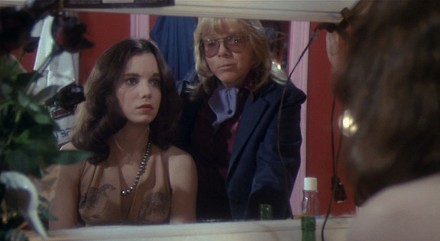
Phantom of the Paradise - 7, 1974
Caged Heat - 10, 1974
Thunderbolt & Lightfoot - 15, 1974
Busting - 18, 1974
The Front Page - 23, 1974


The Boys from Fengkuei - 6, 1983
La Luna - 11, 2011
Young Adult - 18, 2011
The Avengers - 2012
Brave - 2012

Thursday, August 02, 2012

More on the 2012 Sight & Sound Poll


A couple days ago, on the eve of the announcement of the seventh decennial Sight & Sound Poll of the Greatest Films of All-Time, I predicted this for the Critics Top Ten:

1. Vertigo (Hitchcock, 1958)
2. 2001: A Space Odyssey (Kubrick, 1968)
3. Citizen Kane (Welles, 1941)
4. Rio Bravo (Hawks, 1959)
5. Singin' in the Rain (Donen & Kelly, 1952)
6. Sunrise: a Song of Two Humans (Murnau, 1927)
7. Ran (Kurosawa, 1985)
8. Rules of the Game (Renoir, 1939)
9. In the Mood for Love (Wong, 2000)
10. 8 1/2 (Fellini, 1963)

This was the actual Top Ten:

1. Vertigo (Hitchcock, 1958)
2. Citizen Kane (Welles, 1941)
3. Tokyo Story (Ozu, 1953)
4. Rules of the Game (Renoir, 1939)
5. Sunrise: a Song of Two Humans (Murnau, 1927)
6. 2001: A Space Odyssey (Kubrick, 1968)
7. The Searchers (Ford, 1956)
8. Man with a Movie Camera (Dziga Vertov, 1929)
9. The Passion of Joan of Arc (Dreyer, 1927)
10. 8 ½ (Fellini, 1963)

I'd say I did alright, but not spectacular by any means. I had the wrong Western (no Howard Hawks film made the top 50(!) while John Ford's The Searchers returned to the Top Ten) and the wrong Japanese film (I really underestimated how well Ozu would do, I'm quite happy to see).  Singin' in the Rain dropped down to #20 and I'm very surprised the Dreyer and Vertov films moved ahead of it.  The Vertov seems to have shocked everyone, it appears to have supplanted Sergei Eisenstein's Battleship Potemkin as the Top Ten's representative of Silent Soviet Cinema, though Potemkin did end up at #11, so maybe its more a matter of Camera also getting a lot of pro-documentary and -avant-garde votes (it's a landmark of both types of film).  The Dreyer film has been in and out of the Top Ten for decades, so it's less of a shocker, though I don't think anyone predicted three silent films in the Top Ten.  In the Mood for Love was a long shot, but it did end up at #24, the highest ranked film of the last 33 years (1979's Apocalypse Now at #14 is the next most recent) and a mere 22 votes (out of 846) behind 8 1/2 for tenth place.


Here's the Top Ten with where I ranked them last year in my Top 1000 Films list:

1. Vertigo (13)
2. Citizen Kane (38, 3rd among Welles films)
3. Tokyo Story (112, 2nd Ozu)
4. Rules of the Game (9)
5. Sunrise: a Song of Two Humans (6)
6. 2001: A Space Odyssey (44)
7. The Searchers (10)
8. Man with a Movie Camera (298)
9. Passion of Joan of Arc (459)
10. 8 1/2 (148)

And the films in my top ten that did not make the S&S Top Ten and their rank in the S&S Top 50, if any:

1. Seven Samurai (17)
2. Chungking Express
3. Casablanca
4. Annie Hall
5. Singin' in the Rain (20)
7. Duck Soup
8. Night of the Hunter

I'm looking forward to being able to pour through the individual ballots, both for the critics and the filmmakers who participated in the Directors Poll (where Kane also finished second, but in this case to Tokyo Story).  I suspect that when we get a look at the full list, beyond the Top 50, it will look a bit less dominated by the same old established films that make up the Top Ten (only Man with a Movie Camera had never been in the Top Ten before this year, and it's over 80 years old).


With the most recent film on the Top Ten being Kubrick's 43-year old 2001: A Space Odyssey, there's been much complaint (on Twitter if not more reputable places) that the voters are biased towards the films of the post-war Baby Boomer era, or at least against more recent films.  Bicycle Thieves topped the original list in 1952 a mere four years after its release, and L'avventura came in second about two years after its cacophonous reception at Cannes.  On the contrary, though, I'd say we're seeing the effects of exactly the opposite phenomenon.

It took only 64 votes to make the Top Ten.  64 out of 846 ballots, or 7.6%.  You would expect that the more familiar a group is with a certain era of film history, the more films from that era they would vote for, spreading the votes around to such a degree that they're unable to coalesce enough votes around any given film from that era.  The list tends to be dominated older films and Official Best films (Best Western: The Searchers; Best Japanese Film: Tokyo Story (which moved ahead of Seven Samurai in '92 and remains, despite the one being only the second or third best Ozu and the other being the Best Movie Ever); Best Musical: Singin' in the Rain; and so on).  A voter who is very familiar with the films of the last 40 years but not so much with the ones from the previous 70 has a wider pool of recent films to vote for than older ones.  So support for recent films is diffused while the past consensus films live on.  If this is the case, then the poll results we have indicate that the voting critics are not familiar enough with the first 70 years of cinema and are instead too focused on recent films.

Lower on the list we are starting to see consensus build on certain more recent titles (In the Mood for Love at #24, Mulholland Dr. at #28 (a couple years ago, it was our #2 movie of the 2000s over at Metro Classics), maybe Beau Travail at #78) while Coppola and Scorsese struggle to cohere enough support around a single film (Apocalypse Now (#14) or one of the Godfathers (#s 21 & 31)?  Taxi Driver (#31) or Raging Bull (not in the Top 50 this year after finishing 6th in the 2002 Directors Poll)?) in the way a consensus has determined the best films of Ozu, Ford, Welles, Dreyer, Renoir, Fellini, Hitchcock (votes for Rear Window went steadily downward over the decades as Vertigo climbed its way to the top), Murnau, Kubrick, etc.  This vote-splitting is, I think, the biggest reason Godard has yet to crack the Top Ten (he had four films in the Top 50, more than any other director), and why Kurosawa (Rashomon stealing votes from my beloved Seven Samurai), Antonioni, Mizoguchi, Tarkovsky and Bergman find themselves on the outside these days.


For evidence of the growing consensus on the top films of the past 40 years, note that 13 of the 11-50th ranked films are from after 1970:

14. Apocalypse Now (53 votes)
19. Mirror (47)
21. The Godfather (43)
24. In the Mood for Love (42)
28. Mulholland Dr. (40)
29. Stalker (39)
29. Shoah (39)
31. Godfather 2 (38)
31. Taxi Driver (38)
35. Jeanne Dielman (34)
35. Satantango (34)
42. Close-Up (31)
48. Histoire(s) du cinema (30)

If only 23 out of 804 people voted for non-In the Mood for Love Wong Kar-Wai films, (I'd guess that's a pretty safe bet, but we'll know for sure in a few days) and those people switched their votes from Chungking Express or Happy Together or Days of Being Wild or whatever to In the Mood, then there'd be a film from this century in the Top Ten.

What's most shocking about the poll is not its repetition of staid consensus, but just how eclectic it is.  Over 2,000 films received votes.  That only ten of them managed to get even 7.5% of the vote is an argument for just how volatile and in flux the film canon truly is.  Given this environment, the stability of the Top Ten is better seen as a remarkable fluke, or at least a last gasp, than a representative of some kind of critical imperialist tyranny.

Tuesday, July 31, 2012

On the 2012 Sight & Sound Poll


The latest edition of the British magazine Sight & Sound's decennial poll of the greatest movies of all-time is due to be announced about 12 hours from when this posts.  In a field overflowing with Best Of lists and Top Tens and AFI DVD-selling ploys, the Sight & Sound poll stands out as the most prestigious, most long-running canon-defining survey we have.  Every ten years since 1952, they've polled critics from around the world (this year's edition sought out "more than 1,000 critics, programmers, academics, distributors, writers and other cinephiles" according to editor Nick James) to come up with a consensus Top Ten Greatest Movies of All-Time.  The winner in '52 was Vittorio De Sica's Bicycle Thieves, and every year since the list has been topped by Citizen Kane, which is one of the main reasons that film has held the unofficial title of Best Movie Ever for so long.


My own history with the list goes back to the mid-90s, when, as a nascent cinephile working at a video store in Spokane, I would copy titles from the yearly lists that Roger Ebert printed in an appendix to one of his books and scour every video store in town looking for them.  Many of the films listed were unavailable in Spokane in those pre-DVD, pre-internet video, VHS desert days, but I made sure to see them as soon as I could (and when I finally moved to Seattle, I did finally get to see most of them: there are two I haven't yet: 1962's #9 La terra trema and 1992's #6 Pather Panchali).  This is, of course, the main function of Greatest Whatever lists.  It's not just that they're fun to make and argue about, it's that in creating a reasonable version of a canon, they form a roadmap, a concise set of suggested paths to take for those who want to explore the movie world beyond the overexposed ubiquity of new releases.


There's never been a Sight & Sound poll that matches my tastes exactly and it'd be extremely weird and creepy if there were.  Generally, the poll tends to celebrate my second or third favorite films of some of my favorite directors (Kane over Touch of Evil,  Tokyo Story over Late Spring, L'avventura over L'eclisse, The General over Sherlock Jr) alongside personal favorites (The Searchers, The Rules of the Game, Seven Samurai, Sunrise) and the occasional movie I like but don't really love (The Godfathers, Battleship Potemkin).  There's never been a Top Ten film I've out-and-out hated; Bicycle Thieves is probably my least favorite.  My favorite film, Seven Samurai, has only made the poll once, in 1982, and it's either that poll or 2002's that most closely resembles my own idea of the Top Ten.  I make Best of Lists every year here at The End (last year I did a Top 1000), and the Sight & Sound films tend to do fairly well (the lowest ranked of 2002's Top Ten on my list last year was Potemkin, at #503).  I tend to rate comedies more highly than the poll does, but that's probably just a side effect of the collective process: comedies tend to be more idiosyncratic and generational in appeal than dramas, so maybe its a bit harder to form a consensus around them.


Now, my prediction for this year's Sight & Sound Top Ten Critics Poll:

1. Vertigo
2. 2001: A Space Odyssey
3. Citizen Kane
4. Rio Bravo
5. Singin' in the Rain
6. Sunrise
7. Ran
8. The Rules of the Game
9. In the Mood for Love
10. 8 1/2

I'm predicting the triumphant return of the director of my favorite movie to the list, but with my second or third favorite of his films (Akira Kurosawa with Ran), along with my third favorite Wong Kar-wai film (In the Mood for Love instead of Chungking Express or 2046).  I think the Western genre will return to the list, but with Howard Hawks and Rio Bravo a decade after John Ford's The Searchers fell out of the Top Ten.  I suspect Stanley Kubrick will continue his march to the top with 2001: A Space Odyssey, moving past longtime list veterans Singin' in the Rain, Sunrise, The Rules of the Game and 8 1/2, but he'll be held out of the #1 spot by Alfred Hitchcock and Vertigo, which I predict will become the third #1 film in the polls history, finally knocking Citizen Kane of its lofty perch.  Finally, I predict that no longer burdened with Greatest Movie of All-Time status, a new generation of movie-goers will begin to appreciate Citizen Kane for the wildly entertaining film it really is.

Sunday, July 22, 2012

This Week in Rankings


Sailors, Beware! - 16, 1927

An Autumn Afternoon - 1, 1962
A Woman Under the Influence - 3, 1974


My Neighbor Totoro - 6, 1988
Iron Man 2 - 62, 2010
Damsels in Distress - 2, 2011
Tinker Tailor Soldier Spy - 8, 2011

Friday, July 20, 2012

They Shot Pictures: Yasujiro Ozu


This week, I was happy once again to join the They Shot Pictures podcast for a discussion of the great Japanese filmmaker Yasujiro Ozu.  We focused on three films (Tokyo Chorus, Early Summer, An Autumn Afternoon) but covered a lot more.  Check it out over at Sound on Sight or download via iTunes.

Wednesday, July 18, 2012

The Laurel & Hardy Project #12: Sailors, Beware!


The boys' ninth film of 1927, released barely two weeks after Sugar Daddies, finds them on an ocean liner.  Hardy is the ship's purser, enamored of the ladies but pretty much sidelined for most of the film.  Laurel plays a taxi driver who finds himself mistakenly aboard ship (his parked cab is loaded on the liner while he's attempting to put out a cigarette fire in the backseat) and forced by the captain to work as a steward.  The villains are a thief and her husband, a dwarf (Harry Earles) who dresses like a baby to help with the crimes.  Most of the film chronicles Laurel's fights with Earles: the two become antagonists after Laurel loses five dollars to him playing craps with what he later discovers are loaded dice.  Earles is particularly hilarious, you probably know him best as Hans in Tod Browning's classic Freaks where he is victimized by an evil trapeze artist.  His baby-as-grifter is performed beautifully and the times when he one-ups Laurel leading to the now-trademark "weeping face" provide a clever contrast: one grown man dressed like an adult but acting like a baby, one grown man dressed like a baby but acting like an adult.


Laurel's character is more sharply edged here than in any of the previous films.  He's a bit smarter and a bit meaner.  One great little sequence finds him at the ship's pool where a fancy rich lady walks up to him and haughtily gives him the cold shoulder.  In turn, he calmly pushes her into the water.  Her indignant boyfriend rushes up to him shouting, and he pushes him in too.  This kind of chaotic malevolence is new for the Laurel character, who in most of the previous films has been more of a naive rube.  The capper to the scene provides Hardy's best moment: after Laurel runs away, he bumps into Hardy and tells him the girl in the pool wants to see him.  Hardy rushes to the pool only to be doused with buckets of water.  In response, he looks directly at the camera, wearily sighing.  This is the first instance I can recall of this kind of fourth wall-breaking aside, but I suspect it won't be the last.


The film as a whole doesn't really hang together all that well.  In the opening we see a feuding rich couple (one of whom is played by Lupe Velez) who disappear from the rest of the film, and Hardy really isn't given much to work with (the horniness of his character as established in the opening never pays off, so to speak).  But the individual gags are pretty great, and I don't know, if you don't think Harry Earles smoking a cigar dressed as a baby is funny, or the thought of Stan Laurel pushing said baby in his cart down a grand staircase in a gleeful moment of Eisensteinian destruction doesn't make you laugh, then this film probably isn't for you.

Monday, July 16, 2012

Ozu's Fun with Salt

Here are a few shots from Yasujiro Ozu's An Autumn Afternoon, notice anything strange?

In the first shot, the wife walks off-screen towards the camera:


The second shot continues her action, now seen from a perpendicular angle, with her husband lying on the floor in the foreground:


Note the position of the low table and the red, white and blue salt shakers (or whatever they are) in each shot.

Here they are again a few minutes later, in a reverse of the second shot:


They're in a different order in each shot: red, blue, white; blue, red, white; white, red, blue.  Not by magic, it's a trick of depth (or rather, of the flatness of the image) and the way they're arranged on the table, not in an even line, but in some kind of weird triangle (a more mathematically minded person than I am could probably graph it easily).  It's a neat little joke, rhyming with the film's overall playfulness in its color scheme (almost every shot in the movie contains each red, white and blue).

This Week in Rankings


Days of Youth - 7, 1929
Tokyo Chorus - 6, 1931
The Lady and the Beard - 12, 1931
Where Now are the Dreams of Youth - 7, 1932


Early Summer - 1, 1951
Tokyo Twilight - 9, 1957


In the Cut - 11, 2003

Monday, July 09, 2012

1957 Awards


The Endy Awards for 1957:

Best Picture:

1. Funny Face
2. Throne of Blood
3. What's Opera, Doc?
4. The Seventh Seal
5. Pyaasa

Best Director:

1. Samuel Fuller, Run of the Arrow/Forty Guns/China Gate
2. Akira Kurosawa, Throne of Blood/The Lower Depths
3. Budd Boetticher, The Tall T/Decision at Sundown
4. Yasujiro Ozu, Tokyo Twilight
5. Ingmar Bergman, The Seventh Seal/Wild Strawberries

Best Actor:

1. Richard Burton, Bitter Victory
2. Tony Curtis, The Sweet Smell of Success
3. Randolph Scott, Decision at Sundown
4. Glenn Ford, 3:10 to Yuma
5. Toshiro Mifune, Throne of Blood

Best Actress:

1. Tatyana Smojlova, The Cranes are Flying
2. Giulietta Masina, Nights of Cabiria
3. Patricia Neal, A Face in the Crowd
4. Angie Dickinson, China Gate
5. Audrey Hepburn, Funny Face

Best Supporting Actor:

1. Sessue Hayakawa, The Bridge on the River Kwai
2. Hidari Bokuzen, The Lower Depths
3. Gunnar Bjornstrand, The Seventh Seal
4. Bengt Ekerot, The Seventh Seal
5. Adolphe Menjou, Paths of Glory

Best Supporting Actress:

1. Isuzu Yamada, Throne of Blood 
2. Kay Thompson, Funny Face
3. Joan Blondell, Will Success Spoil Rock Hunter?
4. Carol Haney, The Pajama Game
5. Ruby Dee, The Edge of the City

Best Adapted Screenplay:

1. Throne of Blood
2. Bitter Victory
3. Le notti bianche
4. The Tarnished Angels
5. Witness for the Prosecution

Best Original Screenplay:

1. The Seventh Seal
2. Pyaasa
3. Funny Face
4. Run of the Arrow
5. What's Opera, Doc?

Best Cinematography:

1. The Cranes are Flying
2. Jet Pilot
3. Throne of Blood
4. Funny Face
5. Paths of Glory

Best Editing:

1. The Cranes are Flying
2. Funny Face
3. Men in War
4. Tokyo Twilight
5. Run of the Arrow

Best Music:

1. Funny Face
2. Pyaasa
3. What's Opera, Doc?
4. 3:10 to Yuma
5. China Gate

Best Art Direction:

1. Funny Face
2. Throne of Blood
3. The Seventh Seal
4. Le notti bianche
5. The Incredible Shrinking Man

Best Non-Fiction Film:

1. On the Bowery
2. NY, NY
3.
4.
5.

Best Short Film:

1. What's Opera, Doc?
2. A Chairy Tale
3. Show Biz Bugs
4. Steal Wool
5. Ali Baba Bunny

Best Non-English Language Film:

1. Throne of Blood
2. The Seventh Seal
3. Pyaasa
4. The Cranes are Flying
5. Tokyo Twilight

Sunday, July 08, 2012

This Week in Rankings


Douglas Fairbanks in Robin Hood - 6, 1922
I Flunked, But. . . - 12, 1930
Baby Face - 10, 1933


Celine & Julie Go Boating - 1, 1974
Death Race 2000 - 9, 1975


Good Men, Good Women - 2, 1995
We Need to Talk About Kevin - 5, 2011

Friday, July 06, 2012

On Good Men, Good Women


Part of the fun of Good Men, Good Women is piecing together the narrative as it unfolds.  Hou Hsiao-hsien doesn't exactly withhold information, but rather, like in his previous film The Puppetmaster, he tends to explain events only after they've gone on long enough that, if you've made the effort, you've probably figured out what's happening anyway.  So, be warned that there will be spoilers here as I'm going to try to sketch out the different layers of a narrative that folds the past and present in on themselves and reflects them back out again like a disco ball.

The several layers of Good Men, Good Women:

1. An actress (Liang Ching, played by Annie Shizuka Inoh) gets anonymous faxes of her stolen diary entries and phone calls with no one on the other line.  She sleeps a lot and drinks too much and hangs out with unsavory gangster and government types.  She also falls asleep watching Ozu's Late Spring on the television.

2. She recalls her relationship with her now-dead gangster boyfriend Ah Wei (Hou regular Jack Kao).  They were in love, she was a bar hostess, he helped her kick a drug addiction, he was murdered, she accepted a payoff from his killers for which she now feels a bit guilty.  She often thought/thinks about having a child with him but as far as we know has never been pregnant.

3. Liang gets a job playing the lead role in a movie based on the (apparently) real life of Chiang Bi-yu, who went to China with her husband during World War II to fight the Japanese with Mao's resistance, was initially suspected of being a Japanese spy (because they were from Taiwan and didn't speak the local Cantonese dialect), eventually was allowed to join the struggle and was then forced by circumstance to put her first child up for adoption, returned to Taiwan after the war to settle down with her family, and was imprisoned (and her husband killed) when Chiang Kai-shek's Nationalist Party (the Koumintang) took over and started rooting out Communists (much of this crackdown (the "February 28th Incident") is dramatized in Hou's A City of Sadness, which I've still, sadly, not seen).  Throughout the film we see scenes from this (now finished) movie, indicated by washed-out color, a blueish black and white.

4. There are also apparently "real" depictions of Chiang's life, shown in full color and played slightly differently than the "film" versions.  This kind of thing Hou also did in The Puppetmaster, where an event unfolding on screen would be followed by the subject of that event telling us a slightly different version of it in a documentary-style interview.*(See Below)

5. Finally, we learn the film about Chiang is called Good Men, Good Women, which is also the name of the film we've been watching, making it both essentially a "documentary of its own making" and raising the question of whether the film within the film also contains present-day sequences: how much is "fictional" fictional and how much is "real" fictional?


If the film within the film is also the film itself, then Good Men, Good Women is both within and without, just as Chiang's past is both real and depicted, as Liang is both Liang and Chiang (through the act of acting a role) and as Liang's story with Ah Wei is both past and dominating her present (especially as we come to believe that her mysterious phone calls and faxes are being sent by Ah Wei's ghost, literalizing the stranglehold her past has on her present).  It'd be silly to reduce this to some kind of metaphor like "time is a river" or pithy articulation like "the past isn't dead -- it isn't even past" or something like that, and Hou doesn't bother to do so in any kind of Malickian voiceover.  Instead, he just gives us the flow, with all the currents and eddies, branches and backwaters that go along with it.

This is one of the warmest Hou films I've seen, both in technique and in his attitude to the protagonist.  This is the first time I recall that I've seen Hou's floating camera actually move into a frame.  Usually he's content to let his long takes float around a single, middle-distance frame, which keeps us at a safe, theatrical distance from the action.  In Good Men, Good Women, however, he occasionally moves into the screen space, either to get a closer view (as in a shot that moves from a club's dance floor to shoot through a window into a private room where some gangster business is being conducted) or simply to pivot and reframe a location from a different, closer angle (as in one of the first shots of the film, where the TV playing Late Spring is used as a pivot point to reframe Liang in her apartment as she goes through her morning (hungover afternoon?) routine.


What we take from the film is even more than is usual up to us as viewers.  Like Liang Chiang, we have to decide what role the cinematic experience of the past will have on our present lives.  In one reasonable interpretation of the film, it is through the process of re-enacting Chiang Bi-yu's life that Liang gains the strength to confront her own past/ghost and thereby move on with her life.  Significantly, this breakthrough is a specifically cinematic/narrative one: by experiencing the narrative of another person's life mediated by film (or filmmaking) she is able to contextualize/understand/deal with her own issues.  It's by making a story out of history that we begin to understand our own lives.

(Contrast this with Michael Haneke's approach to a similar dynamic in Cache, where a bourgeois man is confronted with anonymous messages reminding him of a crime from his own past that is heavy-handedly symbolic of Haneke's belief that the French should suffer collective guilt over their ancestors' colonization of Algeria.  Hou is sympathetic to his damaged, dissolute heroine and asserts cinema as a means to help her overcome her guilt and make her life a little happier; Haneke seeks to punish his hero and uses film as a means to assert our own complicity in his guilt and brutalize us, to "teach us a lesson", in the process.)


Good Men, Good Women is very similar narratively and thematically to my personal favorite of Hou's films, Millennium Mambo, whose heroine follows much the same progression as Liang: a bar hostess breaks up with a gangster boyfriend, has issues with drugs and apathy and eventually experiences a cinematic epiphany.  Like that film as well, the breakthrough, moving as it is, is also a potentially hollow one.  We're not really sure when the filming of the film within Good Men, Good Women takes place.  It seems to run concurrent with the events in Liang's home, where she is stalked by phone calls and faxes and which are apparently resolved with her confrontation of the "ghost".  But that can't be the case as the film shoot is on-location, and thus Liang would have to be away from her apartment.  The shooting of the film has to take place after Liang has confronted her past.  Conversely, the joy Shu Qi's Vicky in Millennium Mambo experiences in the snow of the Hokkaido Film Festival is a memory, something that happened somewhere in the middle of her story between her petty gangster boyfriend and her older gangster protector (played by Jack Kao), all of which is seen through the lens of a much older Vicky thinking back on her youth in the film's voiceover.  

It's possible that the key scene in Good Men, Good Women is only alluded to in voiceover, when Liang tells us about meeting and interviewing Chiang Bi-yu shortly before her film shoot began.  It maybe that this interview, the inspiration from meeting the aged heroic woman, was the point Liang resolved to confront her past and that her phone call with the ghost took place after this interview but before filming began.  Hou then simply elided what should have been the dramatic high point of his story: the direct confrontation between past and present, when the old lady looks at the young woman and calmly demonstrates the moral authority gained by the difference between suffering for a cause and suffering from indolence.  That would have been the Oscar scene, but it would have grounded, concretized the movie.  It would have drawn sharp lines between past and present and it would have encouraged us to choose sides, to privilege one woman's experience over the other's, to separate and isolate and categorize.  What he's given us instead is something much more elusive, more mysterious, more lifelike.  It floats.


Added August 27, 2012:  One of the many fun and frustrating things about Hou Hsiao-hsien's films is that he never really makes it easy for you as a viewer to understand everything that's unfolding as it happens.  Often, only once a film is completed will all its elements begin to make sense.  This effect is seen in miniature in a sequence from The Puppetmaster: after twenty minutes or so of scenes in which we witness a loving courtship between the protagonist Li Tienlu and a pretty young courtesan, including an elaborate ruse in which she tests his fidelity by tempting him with another woman and which he passes with flying colors, we get a scene of Li himself narrating the next chapter in their story.  At the very end of his interview, as an almost throwaway aside, he mentions that the while he was seeing this woman, he had a wife and children back home in another city.  Suddenly the romance is seen in a new light and the fidelity test becomes darkly ironic.  
This narrative strategy necessarily makes it difficult to catch anything like every nuance of a film on a single viewing, and sometimes even basic plot or style elements can get jumbled in a confusion of memory and speculation.  Hou's films request and reward rewatches as much as any director I know.  Which is to say, I wrote this after having seen Good Men, Good Women only once, and watching it again, I realize I was very much mistaken about this point.
The film within the film of Good Men, Good Women is shown throughout in a blue-tinged monochrome.  What I initially thought were "actual" depictions of the historical events, though, I now am pretty sure are just "present day" footage of the rehearsals for the film Liang is undertaking.  I believe the film's present is in the rehearsal period for the film, as Liang is studying her character, reflecting on her past life with Ah-Wei and receiving mysterious faxes of her old diary entries.  At one point, near the end of the film, as Liang's character Chiang Bi-yu is mourning her executed husband in the film, the monochrome image bleeds into color.  The is the climax of the film: when the film within the film merges with present day reality.  Just as the film posits a fluidity in the relationship between past and present (and history and memory, as in most Hou films), this morphing creates a fluidity between cinema and reality, prefiguring some of the redemptive and transformative power cinema has in Hou's later films like Millennium Mambo, Flight of the Red Balloon and Café Lumière.

Wednesday, July 04, 2012

On Throne of Blood


I just rewatched a bunch of what are generally considered the best films of 1957, and while this still is not my favorite film of the year and might not even be among my five favorite Kurosawas, I think it's absolutely worthy of its lofty spot on the list.  Akira Kurosawa's adaptation of Macbeth to ancient Japan is even darker than Sweet Smell of Success, with a vision of humanity as unchanging, trapped in a cycle of murderous ambition and venality entirely of its own making.  I especially picked up this time on the interaction between prophesy and free will: everything Washizu does is his own choice, but would he have made those choices absent the prophesy?  His troops turn on him at the end, but only because he's told them about the prophesy and they've seen the forest moving, if he hadn't told the, would they have fought back against the siege?  It's telling that it's Washizu's act of mercy (letting the prince and Takashi Shimura go) that leads to his downfall: if he'd chased after and killed them, they wouldn't have led an army that knew how to get through the forest to attack the castle.  It's this kind of thing that marks Throne of Blood as the most tightly constructed of the top movies of its year.  There's none of the haphazard sloppiness of Wild Strawberries, or facile caricatures of 12 Angry Men or Paths of Glory.  Every piece of Throne of Blood fits together perfectly.  Almost a little too well.  There's an airlessness to the film that is totally appropriate thematically (trapped as its characters are in an endlessly recurring loop) but that makes it a bit harder to love than some of the other films from this year (Funny Face for example, though I can see why someone might prefer Wild Strawberries for this reason, though, like I said, that film didn't work for me at all).
The standout actors are Toshiro Mifune and Isuzu Yamada, and they're a perfect contrast in style: Mifune is constantly in motion, constantly retreating and bugging his eyes out. It's one of his most intense performances, he starts at an incredibly high level and stays there for the course of the film, never going over the line into camp or mere bluster.  Yamada's Asaji, on the other hand, is all terrifying stillness.  Her's is the most Noh-influenced of the performances, apparently.  Donald Richie points out that it's the two female characters (Asaji and the forest spirit) that are the most Noh-like, which is interesting if you read the story as more than the tragedy of a hen-pecked husband, it's not just women that cause Washizu's downfall, it's the past itself, embodied in the ancient formalities and drives embedded deep within human nature.

Tuesday, July 03, 2012

On Twitter

You can follow me on Twitter now @TheEndofCinema, because it's finally 2008 here.


Saturday, June 30, 2012

This Week in Rankings


Freaks - 14, 1932
The Mark of the Vampire - 19, 1935 
Northern Pursuit - 16, 1943


Jupiter's Darling - 32, 1955
Throne of Blood - 2, 1957
The Sweet Smell of Success - 17, 1957
Wild Strawberries - 41, 1957
Paths of Glory - 44, 1957
The Enemy Below - 56, 1957
West Side Story - 11, 1961
Man's Favorite Sport? - 13, 1964
The Taking of Pelham One Two Three - 5, 1974 


Moonrise Kingdom - 2012

Tuesday, June 26, 2012

On Man's Favorite Sport?, Briefly


Late Howard Hawks reworking Bringing Up Baby with the relaxed, mellow episodic pace of Hatari!.  In other words, pretty much perfect.  Rock Hudson plays the Cary Grant part (Grant turned it down because he thought he was too old) and he's much better than I expected.  It's uncanny at time how much he looks like the 1930s Grant (with a little bit of Kyle Chandler mixed in) and shows a surprising flair for physical comedy, both in an amazing early sequence with a car half his size and later as he repeatedly pratfalls into a lake.  Paula Prentiss plays the screwball heroine, and she's equal parts Mary Tyler Moore and Jane Fonda, very pretty and charming, if not quite as ideal the Hawks heroine as Angie Dickinson in Rio Bravo.  This being late Hawks, it lacks the wild incandescent energy of Baby or His Girl Friday.  It's a slow-motion screwball, not because Hawks can't get it up to 99 MPH anymore, but because in old age he's simply no longer in a hurry.

Monday, June 25, 2012

On Wild Strawberries


There's a scene fairly early on in this movie that pretty much sums up the problem I have with it and Ingmar Bergman in general.  During the first of Victor Sjöström's flashbacks, we see his "secret fiancee" get kissed by his good-for-nothing brother.  (We know the brother's good-for-nothing because the dialogue helpfully tells us several times that he is, in fact, good-for-nothing.)  After the kiss, the girl, Sara, is anguished.  We know this because she cries "Ah!  I am anguished!" (or something like that, I don't remember the dialogue exactly); because Bergman rushes in for a closer shot of her face, wearing an actorly expression of Anguish; because the kiss has spilled the Wild Strawberries she had been gathering to give her uncle, smearing her white dress--this is Symbolism (we know because Wild Strawberries is also the title of the film): her generous strawberry gift has been ruined by a selfish act, through this same act she has lost her innocence (despite the black and white, we can assume her white dress is now smeared red, please don't make me explain what that is Symbolic of).  Basically, Bergman is never content to let things be subtle, he will let you know exactly what he means in every way he possibly can in every scene.  The film is utterly lifeless, over-determined and surprisingly sloppy.


Another example: we are told repeatedly that Sjöström's is cold, a heartless old bastard, yet all we see is a slightly cantankerous, wistful old man who is nothing but nice to pretty blonde girls and anyone else he comes across.  So when, at the end, he's learned to be nice and wistful, we haven't learned anything.  We've gone on a journey through space and time but not character, as Sjöström's flaws are only asserted in dialogue, never depicted.  The flashbacks do nothing to deepen his character, they show how he was betrayed by women, but not why (we are told his marriage is bad, but we don't ever see any evidence of it, or ever he and his wife together).  This assertion as a substitute for dramatization applies to the character of Sjöström's mother as well: we spend a long scene with her only to be told later that she's "as cold as ice".  But on the evidence of the scene we just watched, I thought she seemed remarkably pleasant for a 96 year old lady that no one ever visits.  This also applies to Gunnar Björnstrand as Sjöström's son.  Ingrid Thulin tells us about his horrible crime: he is also a cold bastard, our evidence is that when she tells him she's pregnant he gets mad and says it's evil to bring a child into the world and he wishes he was dead.  This is clearly a man with serious psychological issues, or it would be if we actually took this nonsense seriously.  Fortunately, we must not, as the whole situation is resolved in Björnstrand's only other scene, where he explains that he now will have the kid because he can't live without Thulin.  Yippee!  Glad that's resolved!


I did like the opening dream sequence, with its overt reference to The Phantom Carriage and a neat little visual trick where Sjöström is walking along a sidewalk, past a lamppost whose shadow apparently falls on the side of a building, but when Sjöström passes, he moves in front of the shadow instead of through it--the shadow is painted on the wall.  This opening sequence owes a huge debt to Cocteau and Buñuel, though it never reaches their height of surreality (Fellini does better in the opening dream of 8 1/2).  The rest of the film as well does follow a kind of dream logic, I kinda like that Sjöström's flashbacks aren't really flashbacks (because they're of things he couldn't have seen) but rather Scroogelike ghostly visitations, but even that logic gets screwed up in the second flashback: Sjöström and his examiner ("You've been accused of guilt."  Blech) are watching Sjöström's wife hook up with some dude in the woods in what first looks like rape but is apparently just infidelity.  Our POV is Sjöström's, looking out in long shot at the couple far off in the distance.  But Bergman repeatedly violates that POV by cutting to close-ups of the couple as they struggle and then talk.  And it isn't just that Sjöström has moved closer, because those close shots are intercut with reverse angles of Sjöström and the examiner in the same distant location, with repeated POV shots of them again looking at the couple far off in the distance.  You could probably get away with applying dream logic to that, except the examiner helpfully explains in dialogue that what we are seeing is a flashback, that Sjöström once stood in this same spot and saw and heard this exact scene.  So the long shot and dialogue is the flashback while the closeups are the dream?  I don't buy it.  I think it's just shoddy filmmaking.

Seventh Seal is soooo much better than this.