Wednesday, December 29, 2010

Movie Roundup: New Year's Eve Eve Eve Edition


The Ghost Writer - A paranoid conspiracy thriller from Roman Polanski that has good performances and great atmosphere and not a whole lot else.  Ewan MacGregor is hired to ghost write the memoirs of former Prime Minister Pierce Brosnan.  Brosnan's being charged with war crimes for helping the US government extraordinarily rend Iraq War prisoners to be tortured, but there may be a bigger secret hidden within the memoirs that cost the last ghost writer his life.  The plot, and the politics, are by far the least interesting things about the film, which is better experienced as a sequence of moods created through images and music.  In fact, I bet I would have liked the whole thing better if it was dubbed into some language I don't speak.


The Good The Bad The Weird - An affectionate homage to the Spaghetti Western and the first film I've seen from director Kim Ji-woon.  Set in Manchuria in the 1940s, the titular guys are all after a treasure map while trying to avoid the police, rival gangs of criminals and the Japanese army.  The Good is a bounty hunter, The Bad is a badass hired killer and The Weird is a comical thief.  The film rollicks from massive action set-piece to massive action set-piece, rarely letting up for anything as boring as character development or plot complication.  Fortunately, the action sequences are wonderfully done.  Kim's camera moves constantly, but never distractingly, and he maintains the integrity of his spaces better than most Hollywood action directors can manage.  It's a tremendously entertaining film, if not as audacious a take on the genre as Wisit Sasanatieng's Tears of the Black Tiger.  The #20 film of 2008.


The Art of the Steal - A rich guy named Barnes amassed a massive collection of post-Impressionist and early modern art and hated museums and rich people.  He built is own museum/school to house the art, and displayed it in fascinatingly incongruous ways (to create aesthetic context for the art, rather than simply chronologically by artist and movement, like most museums).  When he died, he insisted that his art, valued in the billions of dollars, never be sold, or loaned or moved, especially not to the rich swells of Philadelphia society.  So, for the next 50 years, the rich swells did everything they could think of to steal the art, and finally succeeded, under the guise of "saving" the art from Barnes's now fiscally-troubled foundation.  It's a great and depressing story, more so because something not entirely dissimilar is currently happening to my movie theatre (don't ask).  But as a documentary film, it really isn't anything special.  The #40 film of 2009.


The Beaches of Agnes - More cinematically interesting is Agnes Varda's autobiographical documentary.  Narratively it's pretty straightforward, covering her childhood, education, encounters with the New Wave, relationship with fellow director Jacques Demy and various of her films.  Visually, it's something else, suffused with arty mirrors and pretty beaches and recreations of events from her life (sometimes using her films, sometimes not) and brilliant colors and Varda herself walking backwards as she reminisces about her past.  Chris Marker even shows up as an animated cat.  It's all quite lovely.  I kinda want her to be my grandma.  The #24 film of 2008.


Sweetgrass - This is the third time I've seen a sheep give birth on film in the last 16 months and I've really had enough.  Yes, the miracle of life is gross.  Enough!  Much like Way of Nature, a Swedish doc I saw at the Vancouver Film Festival last year, this is about a year in the life of a sheep farm.  And the first half or so of this one is much the same as that one (which was alright, but not really all that interesting).  In the second half of this one, though, a pair of cowboys are left on a Montana mountainside to watch the herd graze for the summer.  One is a grizzled veteran, who mumbles to his horse and shoots wildly at shapes in the night that might be wolverines.  The other is younger, and may very well be the whiniest cowboy who ever herded sheep.  Apparently he's shocked to discover that life on a mountain is hard.  The film's high point is him, on a beautiful mountainside (the locations are absolutely stunning), sheep wandering in the distance, complaining to his mom on a cell phone about how hard his job is.  I see generations of men rolling over in their graves.  The film ends with a short statement that farmers aren't allowed to graze their sheep on these public mountainsides anymore, but we aren't told why.  Perhaps this new generation of cowboys is the reason.  The #42 film of 2009.

Tuesday, December 28, 2010

Movie Roundup: Neptune Discovery Edition


Black Swan - Edges out Susperia as the greatest ballet horror film ever made.  Natalie Portman, in perhaps her greatest performance to date, plays Nina Sayers, a repressed ballerina who gets cast as the two-sided lead in Swan Lake, but in order to play the uninhibited Black Swan part (the id to the lead White Swan's virginal fragility) her director insists she learn to loosen up and get in touch with herself, literally.  Obsessed with achieving artistic perfection, she does her best.  And as her repression cracks, so does the rest of her mind, leading to hallucinations of both the scary and sexy variety, hysterical arguments with her overprotective mom and possible violent actions against Winona Ryder.  Everything we see is filtered through Nina's damaged consciousness, which means we can never be sure whether what we're seeing is real or not.  But this is balanced by director Darren Aronofsky's resolute focus on the physical punishment of the ballet itself.  We get the ugly realism of mutilated toes and feet mixed with the campiness of Natalie Portman turning into a bird.  It's a potent mix of near, but not quite over, the top psychodrama and realism.  Roman Polanski pulled off the same trick with Repulsion, but that film simply made me feel awful, while I loved this one.  It probably comes down to the fact that I'm convinced that in the end, Nina does pull off the transcendence she was after, and that made it all worthwhile.


Winter's Bone - A melancholy noir from director Debra Granik about a poor Missouri teenager (Ree, played by Jennifer Lawrence) who attempts to hunt down her missing father before the cops seize her house, which he has used to post bail.  Ree normally spends her time taking care of her little brother and sister and their mom, who's disabled in some way.  She lives in a run-down back country of pickup trucks and meth dealers, her environment is by far the most interesting thing in the film.  It isn't a mystery so much as a study of the world Ree has to deal with, managed by scary women but ruled by even scarier men, that takes on a near-mythological abstraction and unreality as it moves along.  In the second half of the film, with the mystery slowly wound down to nothing, all we're left with is the girl in the environment, which has few rays of light (literally, the bleak overcast grayness of the cinematography is beautiful).  She gets some help from her terrifying, but mostly decent uncle, played by Deadwood's John Hawkes, who is always great, but the only really helpful adult in the film is the local Army recruiter, who does his best to give her some hope.  Still, it's not really a depressing film, it's more resigned to struggle on in the face of a vast American sadness.


Black Dynamite - It may not sound like much to praise a film for being the movie that Pootie Tang probably wanted to be, but it's either that, or it's the missing third part of the glorious Grindhouse triple feature.  This playful sendup of 70s blaxploitation films is ridiculous, silly and more fun that it has any right to be.  I swear I was completely sober when I watched it, and it was hilarious.  Michael Jai White plays the titular hero, an ex-CIA agent who unretires to avenge the murder of his brother at the hand of gangsters, in a conspiracy involving drugs, orphanages, malt liquor, the fiendish Dr. Wu, master of Kung Fu Island and the Nixon White House.  The #23 film of 2009.


Casino Jack and the United States of Money - A solid lefty documentary by Alex Gibney about Jack Abramoff and the scandal that is the American lobbying and campaign finance system.  The most interesting thing about it are the early scenes of Abramoff in the College Republicans in the early 80s, where he palled around with Ralph Reed (the weasel best known for running the Christian Coalition), Grover Norquist (the libertarian who pioneered cutting taxes as a means of making government inoperable) and, hovering in the background, Karl Rove, the Dark Lord himself.  Abramoff uncovered new and sleazy ways of laundering money to political groups (most egregiously by bilking Indian casinos and sending the money to right-wing, ostensibly Christian (and anti-gambling) groups.  He also produced the Dolph Lundgren classic Red Scorpion, clips of which prove that even Jack Abramoff managed to do some good for the world.


Valhalla Rising - Mads Mikkelson stars as an enslaved, one-eyed Viking who escapes his Scottish tormentors (they tie him to a pole and watch him fight other men, apparently for entertainment, though he always wins in the most gruesome fashion) and, helped by a young boy, joins a group of Christians headed for the Crusades.  Their ship gets lost in a fog, however, and they eventually end up in North America, with disastrous consequences.  It stylistically lies somewhere between Dead Man and Aguirre, the Wrath of God, though it's far more brutal and bloody than either of those two masterpieces, or pretty much any other movie you're likely to see.  Director Nicolas Winding Refn, whose last film Bronson, which I haven't seen yet, is supposed to be pretty good, drains every inch of hope out of the film, and the result is, I'm sure, very similar to what the world must have looked like to a psychotic, one-eyed Viking.  It's a unique and powerful film, with a really beautiful darkness to its images, but I don't think it's a place I'd ever want to go to again.  The #37 film of 2009.

Sunday, December 26, 2010

Movie Roundup: Boxing Day Edition


Exit Through the Gift Shop - A weird French guy living in LA decides he likes filming street artists, so he follows a bunch of them around for years, progressing from his cousin, who puts Space Invaders on things, to Shepard Fairey, who did the famous Obama/Hope poster, to Banksy, the most successful street artist in the world.  After years of filming (and no editing), the French guy dumps all his footage on Banksy and decides to become an artist in his own right.  He spends the next few months creating a whole lot of really bad art and promoting the hell out of himself and his upcoming show.  It opens amidst organizational chaos and is a huge hit.  Bansky himself directed this film, ostensibly a documentary, but who knows how much is real?  It doesn't really matter anyway.  The film is a hilarious nose-thumbing at the art industry, made by people who more or less can't stand many of the people their work appeals to.  It's an assertion of outsiderness from the wildly successful.  It'd be irritating if it wasn't for the fact that these superstar artists seem to be just as bewildered by popular taste, how they themselves went from the underground to being world famous, as the rest of us are.  They clearly have ideas of what makes quality street art, but the Frenchman's success decouples their own success from their own belief in their work's quality (and if everything about the Frenchman is a hoax, what are they then implying about the quality of their own work, which is even more popular?)  Beyond all that, the footage of the artists themselves at work is fascinating: sneaking around in the middle of the night posting giant abstract images of Andre the Giant, using industrial equipment to reshape a phone booth (and then filming the reactions of passersby), covert operations in Disneyland.  No film has ever been more in love with art, and the creation of art, for its own sake.


Double Take - A not entirely annoyingly arty documentary that examines the psyche of late-50s early 60s America through the consciousness of Alfred Hitchcock and a conversation between the 1962 Hitch and his double from 1980.  It intersperses a lot of footage from his TV series (which is easily the best part of the film: Hitchcock was hilarious), documentary interviews with a Hitchcock impersonator, footage of the Nixon-Kruschev "Kitchen Debates" and a series of coffee commercials and the whole thing is inspired by a Jorge Luis Borges story (which I haven't read yet).  It sounds crazy, but it actually all makes sense as you watch it, which is of course, what making this kind of film is all about.  Rather than make a narrative argument about the culture of the time, it makes an emotional one: you feel the confusion and paranoia of a turning point in world history better than you could ever rationally understand it.  It maybe it makes complete rational sense and I just didn't get it.  Either way, it's a pretty good film.  The #38 film of 2009.


Centurion - A rock-solid, more or less historically-based action film starring Michael Fassbender as a Roman soldier in Northern Britain, the lone survivor of a Pict assault who escapes only to join a larger expedition against the savages that also gets slaughtered, Last of the Mohicans-style.  He and a handful of others (including the guy who played Mickey on Doctor Who) go after the Picts to rescue their captured general (Jimmy McNulty).  What follows is an epic chase as the Romans are hunted by a tongueless psychotic woman who holds a real grudge (think Magua, again from Last of the Mohicans).  As well as being a beautifully shot and competently edited action film (which is a rare enough thing these days, director Neil Marshall deserves a lot of credit, I really should see his horror film The Descent) the film also has at least something going for it thematically.  At first, you get the sense that the filmmakers are trying to comment on Iraq or Afghanistan (imperial over-extension and whatnot), but sure enough, as the film goes on it proves to be not so much about the current wars as it is about every war, and every war movie.  A tribute to one and critique of the other, and/or vice versa.  In the end, it makes the most profound statement of all: rather than fighting, wouldn't we all be better off living in a hut with Imogen Poots?


The Exploding Girl - A nice little indie character study of an epileptic young woman (played by Zoe Kazan) and her best friend Al (which is a weird name for a guy these days, isn't it?), at home in the hipsterest parts of Brooklyn for spring break.  Kazan has a boyfriend who doesn't seem all that interested in her, and she and Al clearly dig each other, but they're too shy or too scared or too something to do anything about it.  It very sweet, and lovely to look at.  It reminded me more than anything of Shunji Iwai's April Story, which I really love.  It isn't that good, but it's also a bit more jaded (though to be fair, everything is).  The #27 film of 2009.


Looking for Eric - This is about the last thing I expected from a Ken Loach film, but since I only know his non-The Wind that Shakes the Barley work by reputation, I can't say if its a real departure for him.  What I can say is it's one of the best heartwarming films I've seen in quite awhile.  Steve Evets plays a postal worker who's depressed about having to see his ex-wife every week (they're watching their granddaughter while their daughter studies) and has no control over his hoodlum stepchildren, one of whom is in deep with a local gangster.  So, under the influence of his kids' pot, he has visions of former Manchester United star Eric Cantona (playing himself) who teaches him valuable life lessons.  Imagine the scenes of Elvis advising Clarence in True Romance, but in a social realist comedy/drama about working class Mancunians.  Cantona is hilarious, a constant stream of bizarre aphorisms that make just enough sense, and Evets's transformation from sad sack to stand-up guy (abetted just as much by his loving group of coworkers and fellow United fans as the phantom footballer) is as wonderful as it is believable.  The #22 film of 2009.

Saturday, December 25, 2010

Thursday, December 23, 2010

Movie Roundup: Festivus 2010 Edition


127 Hours - James Franco stars as one of those Gatorade-drinking thrill seekers that devote their lives to making the rest of us feel lazy who one day gets his arm pinned under a rock and has to endure the title amount of time until he manages the necessary amount of willpower, dehydration and desperation to saw his own arm off and escape.  Danny Boyle throws as much visual noise into the story as he can, making possibly his most frenetic movie since The Beach, which, perhaps coincidentally, was also about an adventurous young man being trapped by his environment.  Stuck as he is in one location, Boyle keeps the focus relentlessly on Franco, who gives what is easily his best performance, equal parts intense determination (his character is an engineer in his non-free (ahem) time), wild-eyed joie de vivre and, at the film's spiritual climax, real acceptance and understanding.  The movie's essentially a hyper-caffeinated The Diving Bell & the Butterfly.  It walks a perilous line thematically, as it's about an amazing individual achievement by one man that spiritually depends upon his coming to understand that he needs other people in his life.  It's about the paradox that while we humans are capable of doing wonderful, terrible things, we're probably better off in groups, or at least always leaving a note.


Lifeline - Director Johnnie To's breakthrough film, one that marked his leap from entertaining genre movies like The Heroic Trio to top-flight action films.  It's billed as a Hong Kong version of Backdraft, but it's much better than that movie.  Following a group of characters in and around a HK firehouse, the film alternates intense scenes of firefighters at work with various melodramatic problems in their outside lives.  With 40 minutes or so left in the film, though, those various problems get resolved (we don't care all that much about any of them anyway) and To gives us an extended, complex and very intense climax wherein the fighters have to rescue people, and their fellow firefighters, from a fire in a massive factory filled with all kinds of nasty chemicals and only two doors(!).  So basically, the film has the exact same structure as John Woo's Hard Boiled, the greatest action film of all-time.  And while this one doesn't have Chow Yun-fat or Tony Leung (though Simon Yam is pretty great in his own right) or Woo's metaphysical dualities (To is never metaphysical, at least not on purpose), it does have Ruby Wong diving into a hole in the middle of a monsoon and pulling an abandoned infant out of a collapsing mud pile.  And that's something.  The #12 film of 1997.


The Power of Kangwon Province - I think Hong Sangsoo gets better with every film he directs, so it was with some trepidation I watched this, his second feature.  Most of the familiar things I love about Hong's films are already in place: a dual structure wherein the second half varies the events and deepens the themes of the first, a sly, off-hand sense of humor that deflates his largely egotistical and self-involved characters, and a real appreciation for the joys of vacation and binge-drinking.  The first part of the film centers on a trio of girls who spend a few days in Kangwon, visiting the local sights.  One of them (Jisook) flirts with a married local cop and eventually spends the night with him.  In the second half, we meet a university professor, married and currently unemployed who goes to Kangwon on vacation with a friend.  Turns out they're there around the same time as the earlier girls, and though they don't meet in Kangwon, they are otherwise connected.  Though there are some moments of that trademark Hong humor here, it might be his most oppressively depressing film.  His later works manage to explore similarly dark territory in the relations between men and women, but they're more leavened with self-deprecating humor and moments of absurdity.  It's still a very good film, and I might even prefer it to one later Hong film (Woman is the Future of Man, which I need to see again), but lately he's operating on a much higher level.  The #14 film of 1998.


The Romance of Astrea and Celadon - Eric Rohmer's death 11 months ago was a catalyst for me to finally watch some of his films, and I've loved every one of the eight I've seen so far.  This was his last movie, set in fifth century Gaul and about a community of Druidic shepherds slowly Christianizing.  Astrea loves Celadon, but his parents don't approve of her, so she has him flirt with another girl, then gets horribly jealous when he does.  She bans him from her presence and he jumps in the river.  He survives, meets some nymphs (one of whom also falls in love with him), lives in a hut for awhile, dresses as a woman and builds a shrine, which is explained to a group of pilgrims in terms surprisingly like the Catholicism of My Night at Maud's.  You wouldn't think that the Rohmerian tradition of lengthy conversations about morality and sexuality would translate well to fifth century Gaul, but it does.  It's the lightest, prettiest Rohmer I've seen.  It floats.  The #5 film of 2007.


Disciples of the 36th Chamber - A bizarre melding of the Fong Sai Yuk story into Lau Kar-leung's 36th Chamber of Shaolin mythology, and one that doesn't entirely work.  It's weird, in that traditionally, Fong's mother (who taught him kung fu) is the daughter of one of the Five Elders of Shaolin, who survived the destruction of the Temple by the Qing.  So when young Fong, here played by Hsiao Ho, is sent to the Temple to train (and learn some humility), things get a bit confused.  And yes, I'm aware of the ridiculousness of complaining about accuracy in a genre where people can routinely leap 30 feet in the air and knock over 20 armed men with a wave of their palm, but what can I say?  I am what I am.  Anyway, Gordon Liu's San Te, the master of the 36th Chamber, does his best to teach Fong to mellow out, but fails.  And when Fong unwittingly (literally, the guy is really dumb) becomes a pawn in a Qing scheme, the Shaolin monks must come to the rescue in the expected spectacular extended fight sequence.  It's a perfectly good film, but it feels more like Lau is just going through the motions at this point.  The slapstick comedy isn't at the genius level of Stephen Chow, or even Wong Jing (part of that has to do with Hsiao Ho, who just isn't that compelling a presence) and the action isn't really anything we haven't seen before, and better, from Lau and Liu.  The #13 film of 1985.


Shaolin Mantis - A much better Lau Kar-leung film is this one starring David Chiang.  He plays a spy sent by the Manchus to infiltrate a powerful anti-Qing family, failure will result in his parents' execution.  Despite the family's misgivings, he manages to marry their daughter, under the condition that he never leave their compound.  But eventually, he and his wife try to leave, and must combat the rest of the family, in turn, in their various styles.  Chiang fails initially, goes a little crazy, and invents a new style of kung fu by imitating a praying mantis.  With his new skills, he returns to the family to exact his bloody revenge.  The setup for the film is a bit tiresome, but once the fights begin, the film takes off.  Chiang isn't as intense or virtuosic a performer as Lau's adopted brother and frequent star Gordon Liu, and he shows less of his natural charm here than in his films for Chang Cheh earlier in the decade, but he's still my second favorite Shaw Brothers star of the 70s.  The #12 film of 1978.

Wednesday, December 22, 2010

Movie Roundup: Ludachristmas Edition


Hamlet - This is the Royal Shakespeare Company version that aired on PBS earlier this year and sat on my tivo for six months or so.  David Tennant stars and aside from the first monologue, which I thought was a little awkward, he does a pretty good job.  It may just have taken awhile for me to get adjusted to him reciting Shakespeare, but as the part calls for a lot of the things Tennant did well on Doctor Who (quick wit, brainy humor, loud and dramatic speechifying) the role turned out to be a somewhat surprisingly good fit for him.  Patrick Stewart is the other big star, playing Claudius, and he manages to distance himself more from his Iconic Sci-Fi TV Character (though he's farther removed from his part than Tennant is from his).  The staging follows closely the RSC staging, with only a few concessions to the cinematic.  The only really interesting thing about it is a mirror motif: all the interior action takes places on a single, variously redecorated set the features a prominent mirror, shattered when Hamlet kills Polonius.  The mirror remains shattered in all the other sets for the rest of the play, serving as a nice visual turning point in the action, setting the inevitable cascade of violence finally into motion.  The #23 film of 2009.


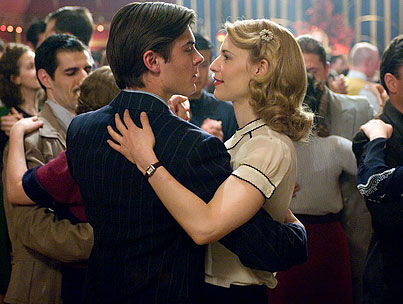
Me and Orson Welles - Richard Linklater's sweetly fictional story of a young man who gets himself hired onto Orson Welles's production of Julius Caesar in the wild early days of the Mercury Theatre.  Zac Efron plays the kid with a wide-eyed innocence that's pretty charming, and that pretty much goes for the rest of the cast as well, especially Claire Danes as a PA who may or may not be sleeping her way to Hollywood.  Christian McKay got a lot of praise for his performance as Welles, and it is a fine example of celebrity impersonation acting.  The whole movie, much as it tries to make theatre people seem cynical and manipulative and cruel, has the effect of a warm puppy.  It's Linklater at his most huggable.  The #20 film of 2008.


The Friends of Eddie Coyle - Pretty much the opposite is this mellow crime film by Peter Yates.  Robert Mitchum plays a burned out small time crook trying to keep himself out of jail.  Will he rat out some old colleagues who are in the midst of a bank-robbing spree?  Or perhaps the young gun dealer he's been working with?  The action scenes are fantastic, Yates brings the same meticulousness in the details of professional crime he brought to Bullitt five years earlier, each heist as suspenseful and enthralling as anything in the genre.  Mitchum's sad sack crook is compelling as well, he's never seemed more pathetic, and Yates even gives him some touchingly mundane scenes with his family.  The supporting cast is solid, but a particular highlight is Robert Jordan as Mitchum's police contact.  Jordan went on to become one of my favorite character actors of the 1980s (The Secret of My Success, The Hunt for Red October).  The #7 film of 1973.


Intermezzo - A Love Story - Upon retiring, famous violinist Leslie Howard suddenly notices that his daughter's music teacher is a young and naive Ingrid Bergman, so he convinces her to run off with him in a wild burst of infidelity.  This and a conveniently non-fatal accident eventually makes him feel guilty and he goes home, leaving poor Ingrid to find some way to survive.  I think she'll make out alright.  This is a Hollywood remake of the Swedish film that first made Bergman a star.  I haven't seen that one, but I hope the male lead is more of a match for Bergman than Howard, perhaps the most inexplicable sex symbol of 1930s Hollywood.  The #26 film of 1939.


The Front Page - Or, the original version of His Girl Friday.  Adapted from the stage play by Ben Hecht and Charles MacArthur by writers Charles Lederer and Bartlett Cormack (all four of whom went on to be terrific screenwriters throughout the 30s and 40s) and directed by Lewis Milestone, the film stars Pat O'Brien as Hildy Johnson, the reporter who wants to quit and get married but is dragged back in by the love of his job and/or his conniving boss, played by Adolphe Menjou.  It's not quite as fast or funny as His Girl Friday, and Milestone mostly keeps the film confined to the reporter's room at the jail, betraying the film's stage roots and the limitations of early sound film (at least in the hands of directors who aren't named Lubitsch or Clair or Sternberg).  But what it does have over its remake is a pre-Code bluntness, not just in the naked girls that decorate the walls, but in the political content of the crime at the heart of the film.  The Hawks film bogs down in in one of the worst scenes in screwball comedy, where Hildy interviews the man under arrest for murdering a cop and speaks vaguely of "production for use" and builds a case for the man suffering under the delusional influence of union activists.  In this film, the condemned man is an articulate and defiant communist (and the cop he killed is black!) and his girlfriend is blatantly a prostitute.  This doesn't add a whole lot to the film, but it helps increase its sense of gritty reality, whereas the Hawks film, for good and bad, but mostly good, lives in a delirious make believe world of Cary Grants and Ralph Bellamys.  The #7 film of 1931.

Monday, December 13, 2010

Movie Roundup: Four Days of Rain Edition


The Lusty Men - In director Nicholas Ray's low-key and grungy sports film, Robert Mitchum plays a broken down rodeo star who tries to go straight as a ranch hand but ends up igniting the bull-riding dreams of a young cowboy (Arthur Kennedy, always solid in supporting roles and quite good in a bigger part here).  Much of the plot of The Color of Money follows, with Kennedy's early success leading to the kind of arrogance that alienates his wife.  Susan Hayward, as the stick in the mud wife that's become a cliche in modern sports films, is a revelation here.  I'd only seen her before in Beau Geste and I Married a Witch, in neither of which does she convey the weary steeliness she displays here and she manages to make her stock character easily the most sympathetic one in the film.  Ray sticks so tenaciously to the modest dreams of his characters and makes so real their world that for awhile we actually believe that managing to stay on a bull for 10 seconds in Calgary is enough to make a man legendary and wealthy beyond imagining.  And of course it is.  The #11 film of 1952.


Greenberg -  Strange that this and The Social Network would come out within a few months of each other, both being attempts by aging Gen Xers to understand the younger generation.  Or maybe not, I guess these things can come in pairs, like volcano or asteroid movies.  In The Social Network, David Fincher and Aaron Sorkin try a few different ways of filtering 26 year old billionaire Mark Zuckerberg through the nerd stereotypes of their own generation, never coming up with an adequate solution to the mystery of why he seems like such a jerk.  In Greenberg, Noah Baumbach and Jennifer Jason Leigh use Ben Stiller's character as a kind of generational surrogate.  He's the Chris Eigeman character from Baumbach's masterpiece Kicking and Screaming, 15 years later and having never grown up.  That's not the right phrase though, as it implies maturity, which no one in Baumbach's films ever achieves.  Rather, he failed to adapt as the world changed.  He's a musician who refused to sell out (a Gen X ideal if ever there was) and now spends his time writing letters to the editor.  While house-sitting for his (successful) brother, he has a tentative romance with mumblecore starlet Greta Gerwig, as much an avatar for her generation as Stiller is for his.  The film follows Stiller as he tries, via his relationship with Gerwig, to adapt to the new while resolving and moving on from the old (via his relationships with his old bandmate (Rhys Ifans) and girlfriend (Leigh)).  It's a mid-level film for Baumbach, I think, not as funny as his first two films, but less angry and misanthropic that his last two (The Squid and the Whale and Margot at the Wedding).  It instead provides the best balance between those two strains in his work, and Stiller gives his best performance in years.  The climactic scene when Stiller monologues about how much he hates and fears these kids today is one of the best scenes of the year, and comes closer than anything I've seen yet at really understanding this generation gap.


Undercurrent - A variation on the Rebecca/Suspicion/Secret Beyond the Door formula, though it isn't nearly as good as any of those, wherein an innocent young woman marries a man who may or may not be a murderer.  Katharine Hepburn's the woman, trying her best to appear naive, who marries Robert Taylor, a wealthy businessman who gets unusually angry whenever his brother, missing for some time now, gets mentioned.  Did he kill his brother?  How does Robert Mitchum fit into this?  And most importantly, is this really a Vincente Minnelli film?  It has few of the obvious touches that would mark it as Minnellian, as this kind of noir isn't really a genre he's known for (is The Bad and the Beautiful the next most noir Minnelli?).  But still in its early sections, with the focus on Hepburn's humble, science-devoted life with her father and then her troubles fitting into her new husband's high society world, there are flashes of the man who made Meet Me in St. Louis, Gigi and Tea and Sympathy.  Unfortunately, it's not enough to inject more than a little life into the formula, and the film drags much more than it should, without any of the compensatory weirdness of the above Hitchcock and Fritz Lang films.  The #17 film of 1946.


The Canterville Ghost - Margaret O'Brien stars as the child owner of a big English estate that serves as a home to American troops during the war.  Said estate also happens to be haunted by the most notorious ghost in England: Charles Laughton, sporting his second worst mustache ever.  Laughton was ghostified 300 years earlier when he failed to come to the aid of his brother, Peter Lawford(!) and was walled up in the house and cursed by his father.  Only if one of his descendants commits an act of courage will he be freed.  It turns out one of the GIs, Robert Young, is just such a descendant, so the three of them contrive various ways to be brave.  It's based on a story by Oscar Wilde and directed by Jules Dassin, and despite the greatness of Laughton and O'Brien (who is almost as brilliant as she was this same year in Meet Me in St. Louis), who share some great scenes together, it's really never as good as all that talent would lead you to believe.  Still, it's a fun little movie.  The #16 film of 1944.


St. Martin's Lane - A much better Laughton film is this one, known as Sidewalks of London in the US (which I think is actually a better title).  He plays a street performer who earns his money reciting poetry very loudly and with little feeling before lines of theatre-goers.  Vivien Leigh steals his hatful of money, he chases her, espies her dancing in a moonlit, shadowy abandoned mansion (a lovely scene) and convinces her to join up with him in the performing business.  Being Vivien Leigh, though, her talent is uncontainable and she's soon a star, performing indoors and dating Rex Harrison and leaving poor Laughton drunk and in the dust.  It's a variation on the A Star is Born formula, and one of the best, buoyed by a heartbreaking performance from Laughton and an electric one from Leigh.  You do have to get past their outrageous accents though, they are well over the top.  Director Tim Whelan began his career as a writer with Harold Lloyd and went on to be one of the directors behind the 1940 Thief of Baghdad.  The #7 film of 1938.

Sunday, December 05, 2010

Movie Roundup: Share The Gnus Edition


Design for Living - Miriam Hopkins can't decide between a pair of struggling artists, playwright Frederic March and painter Gary Cooper, so they all agree to a joint, non-sexual cohabitation.  Predictably, as soon as March goes away for awhile, she hooks up with Cooper, because the young Gary Cooper is almost as irresistible as Miriam Hopkins. But since writers write movies, this one by Ben Hecht from a Noel Coward play, March gets a chance to win her back, whereupon she, predictably, leaves them both for Edward Everett Horton.  OK, maybe that isn't so predictable.  Director Ernst Lubitsch is a perfect fit for this material, his lightness managing to avoid the self-indulgent ponderousness, and narrowly masculine point-of-view that François Truffaut would bring to similar material in Jules and Jim.  The #7 film of 1933.


Barbary Coast - Miriam Hopkins again, this time as a woman of loose morals who arrives in frontier San Francisco to find her fiancée dead.  So she gets a job at Edward G. Robinson's casino as a physical attraction/roulette cooler.  Robinson's the beruffled bad guy (and is apparently French: he sports the ridiculous name "Luis Chamalis") who runs the town and is crazy for Miriam, and she's pretty much resigned to her miserable life until she meets an idealistic prospector played by Joel McRea, who is Robinson's opposite in pretty much every way.  In the background is the formation of a kind of law and order in the nascent community, which quickly turns into the ugliest kind of mob violence, and Walter Brennan with an early, gleefully immoral version of the character he'd play in later Hawks films like To Have and Have Not, Red River and Rio Bravo.  The resulting film is a bit of a mess, and was originally a William Wyler film (Hawks was brought on after Wyler was fired), but it was written by Ben Hecht and Charles MacArthur, which means it's good enough even when it doesn't make a whole lot of sense.  The #10 film of 1935.


Ecstasy - A movie that attempts to answer the age-old question: is it possible to be really beautiful and utterly silly at the same time?  Made in Czechoslovakia by Gustav Machatý, it stars Hedy Lamarr as a girl who marries a much older man.  The opening, near silent sequence depicts her horrible disappointment on her wedding night and every night thereafter, when her husband would rather sleep than sleep with her.  One day, she's off bathing naked in a pond when her horse, who is holding her clothes, takes off in a wild search for a lady horse, leaving poor Hedy to run naked through the countryside in pursuit and in full view of us and some road workers.  Who among us hasn't been there?  She meets the engineer in charge of the project and yadda, yadda, yadda, she's made very happy and leaves her husband.  The film was quite famous/notorious in its time for the extended nude scene as well as what was reportedly the first sex scene in a non-porn film, it may also be credited with creating the "foreign art movie = boobies!" idea that has been so vital to the art house movie theatre industry.  It'd be easy to dismiss it were it not for the fact that it's such a beautifully crafted film, more rooted in the style of the great films from the late silent era than the early sound films of the period.  Three of the four main sections of the film (the opening wedding night, the sex scene and the tragic conclusion; with the fourth being Lamarr's naked fun run) are masterpieces of mood created through lighting, editing and score with almost no dialogue.  Machatý didn't have much of a film career following this film, but it made Lamarr an international star and she went on to invent cell phones.  The #13 film of 1933.


Love Me Tonight - Maurice Chevalier and Jeanette MacDonald interrupted their string of musicals directed by Ernst Lubitsch set among European nobility to star in this musical directed by Rouben Mamoulian set among European nobility.  Chevalier plays a tailor who get mistaken for a nobleman when he tries to collect a bill from drunken black sheep Charles Ruggles.  While at Ruggles's family estate, he meets MacDonald, a princess or something, who despises him and then loves him as one can only despise and love Maurice Chevalier.  Chevalier falls for her too, which is inconceivable considering Myrna Loy is prowling around the estate as well.  Jeanette MacDonald is not without her charms, but there is no world in which she is preferable to Myrna Loy (MacDonald and the censors apparently agreed, as the one demanded wardrobe changes for Loy and the other cut some of her scenes for being too sexy).  Anyway, aside from a lovely opening sequence seemingly inspired by René Clair's musicals form the same era (Under the Roofs of Paris, Ã€ nous la liberté) and the great "Isn't It Romantic", the songs are merely OK and MacDonald's singing is as annoying as ever.  There's enough else going on that it may very well be better than any of the Lubitsch Chevalier/MacDonalds, but these actors just are not for me.  The #13 film of 1932.


Roberta - What's the point of a Fred Astaire/Ginger Rogers film that has only three dance sequences?  I really don't know.  Instead we have a romantic comedy of sorts with Randolph Scott as the heir to a fashion empire and Irene Dunne as the head designer.  They quarrel over ladies' outfits: he thinks they should show less skin, thus confirming that he is indeed the Worst Fashion Designer Ever.  Astaire's his buddy who's in Paris with a band, Rogers is a fashion client pretending to be a Russian countess or something.  I like Irene Dunne as much as the next guy, but in 1935 no woman in Hollywood was a match for Ginger Rogers, it's a travesty that she's barely in the picture.  The #15 film of 1935.


The Egg and I - Claudette Colbert and Fred MacMurray are cityfolk who buy a chicken farm in the middle of nowhere.  Their new place is a dump and everything from nature to their thieving neighbors Ma and Pa Kettle seem to be conspiring to make them fail.  Hilarity ensues.  Well, not really, but it's pleasant enough and even gets a little dark at the end.  It's like Funny Farm, but better.  Did you know Funny Farm is available on Blu-Ray?  This cannot be good for our civilization.  The #18 film of 1947.


Way Down East - A very naive country girl (Lillian Gish, lovely as ever) is tricked into thinking she's married to rich jerk Lowell Sherman.  After she gets knocked up, he abandons her, telling her they were never married after all and she's doomed to a reputation of sluttiness forever.  After giving birth, she tries to make a new life for herself as the maid to a wealthy family, but Sherman turns out to be their neighbor (and have romantic designs on one of their relations) and even though Richard Barthelmess, the son in the family falls for her (and how could he not, she being Lillian Gish?) tragedy will surely strike when her secret is revealed.  It may be even more florid a melodrama than typical from director DW Griffith, a master of florid melodrama, but the final chase sequence (it can't be Griffith without a chase sequence) across melting river ice is one of his best.  The #3 film of 1920.


Safety Last! - This is the third Harold Lloyd film I've seen, and it's easily my favorite.  I still don't think he's particularly funny, but the second half of this movie, where he climbs a building in order to get a promotion so he can get married (don't ask) is as remarkable and suspenseful a sequence as I've seen in silent comedy.  This is where the famous shot of Lloyd hanging off the face of a clock comes from.  Of course, Buster Keaton would have actually climbed the building instead of relying on below the shot platforms*, but it's Lloyd's curse to perpetually be compared to Keaton and Chaplin, where he will always come up short.  The first half of the film is pretty good as well, with some good slapstick as Lloyd tries to deal with dozens of customers at once. Though, as usual with Lloyd, the jokes are overlong and underfunny.  The #2 film of 1923.

*Edit: Turns out Lloyd was missing a thumb and two fingers on his right hand, thanks to a prop explosion in 1919.  That excuses him from resorting to camera tricks for his great stunt, I think.

Friday, December 03, 2010

Movie Roundup: Beautiful Dark Twisted Edition


All Men Are Brothers - A sequel to the Chang Cheh-directed adaptation of a section of the classic Chinese epic The Water Margin, which I wrote a little about here.  This one isn't quite as good, though it is more focused in story and character.  The band of outlaws from the first film, now reconciled with the Emperor, attempts to capture the seaside town Hongchow.  Spies infiltrate the city, come up with a plan, and execute it.  In the meanwhile, lots of heroes get the chance to prove their heroism by dying heroically in Cheh's characteristically brutal kung fu sequences.  David Chiang again stars, though he doesn't get the chance to be as charming as he was in the first film.  The #11 film of 1975.


Brothers Five - More interesting is this film starring Cheng Pei-pei (Come Drink With Me, Crouching Tiger, Hidden Dragon).  She plays the daughter of kung fu master who's sworn to reunite the separated children of the title so they can take revenge on the villain who killed their father and whose gang terrorizes the local town and countryside.  The brothers have no idea of their family history, but have each learned complementary skills that only they can combine, Voltron-style, to defeat the bad guy.  Again, the fight scenes are the big draw here, and they are impressive.  More unusual is the way director Lo Wei films them, often in overhead longshots that are far more panoramic and lyrical than you usually get in Shaw Brothers films of this period.  This lends his big action set-pieces, with dozens of soldiers fighting multiple heroes in discreet parts of the frame, a scope and grandeur unlike anything else I've seen.  Lo went on to direct a couple of Bruce Lee films I haven't seen yet (Fist of Fury and The Big Boss).  I guess I need to watch those now.  The #6 film of 1970.


No Man of Her Own - Directed by Mitchell Leisen, Barbara Stanwyck plays a poor knocked up girl abandoned by her jerk of a boyfriend who gets mistaken for the new daughter-in-law of a rich family after a train crash (the real daughter and son are killed, no one knew what the actual bride looked like).  She goes along with it, for the sake of her kid, naturally, and falls for her dead supposed husband's brother.  When the old boyfriend shows up talking blackmail, we get to find out just how noir the movie's going to get.  It's a solid film, but Stanwyck could do roles like this in her sleep.  The rest of the cast and crew are very competent, but the film never really gets as twisted as the material, and Stanwyck, seems to want it to be.  Instead, Leisen goes for the melodramatic punch and pretty well succeeds, or maybe I'm just a sucker for sad moms.  The #18 film of 1950.


Remember the Night - An even better Stanwyck/Leisen collaboration is this screwball melodrama written by Preston Sturges.  Stanwyck is a petty thief who gets arrested right before Christmas break; Fred MacMurray's her prosecutor.  Through irrelevant narrative maneuverings, Fred ends up taking Barbara to his family's idyllic middle American homestead for the holidays.  Along the way, her hard-boiledness melts away thanks to the generous awesomeness of the American rural middle class (personified as usual by Beulah Bondi).  It sounds silly, but the actors are so good, and Sturges's script so smooth, that by the time I realized what was happening, I was hooked and believed every bit of it.  It's not as crazy as the films Sturges directed himself, I have to think that's due to Leisen, a director who seems more at home in the midwest than the anarchic city.  Not that he didn't make great straight screwballs: Midnight and Easy Living are unassailable, but even they aren't as wild as the best of Sturges.  This film seems a pretty perfect middle ground between the two of them.  The #11 film of 1940.


It's a Wonderful World - Few screwball comedies are as wild, though, as this one by WS Van Dyke from a screenplay by Ben Hecht and Herman Mankiewicz.  A kind of combination of The 39 Steps and It Happened One Night, Jimmy Stewart is a private eye who's going to jail for protecting his client, a rich drunk who's been framed for murder.  He escapes, daringly jumping from a moving train into a river while handcuffed to a cop, who he then beats into unconsciousness, as only Jimmy Stewart can.  Reaching shore, he kidnaps Claudette Colbert and drags her along as a hostage, beard and eventual generally unhelpful co-conspirator.  While of trying to evade the police and gather the evidence needed to free the rich drunk before his execution, the two adopt a dizzying array of disguises and knock many, many people on the head.  It's everything you want a zany screwball proto-noir to be.  The #21 film of 1939.


Los Angeles Plays Itself - Thanks to the wonderful world of copyright law, this magisterial documentary by Thom Anderson is unavailable on DVD.  It's a two and a half hour look at representations of Los Angeles (not "L. A.") in Hollywood cinema throughout the 20th Century, and mostly about how bad or annoying or wrong those representations are.  It seems that, like the rest of us, Los Angeles hates itself.  Consisting entirely of film clips (there are hundreds, hence the rights issues), Anderson manages not only a highly personal history of a city (along the lines of the more recent My Winnipeg by Guy Maddin, Of Time and the City by Terrence Davies and I Wish I Knew by Jia Zhangke) but also a fascinating study of the way film uses architecture and environment to convey meaning (almost always, quite literally, in the background) and occasionally different meanings with the same architecture.  Most damning, for Anderson, is Hollywood's demonization of mid-century modern architecture, which we see again and again in the movies as proxies for villainy (the Lethal Weapon 2 clip here is possibly the funniest moment in a very funny film).  I'd never before seen an entire film over the internet, and a don't like watching them on computers, but this singular film is absolutely worth seeking out by whatever means are available to you.  The #3 film of 2003.


The Woman on the Beach - Jean Renoir left France for Hollywood in the wake of the disastrous opening of The Rules of the Game and the German invasion.  He made a few films while here, this being the last of them (the only other one I've seen, The Southerner, I liked quite a bit).  This one was apparently extensively altered after he finished with it, in an attempt to make it more popular, but that, as it usually does, failed.  It's a moody noir with Robert Ryan as a Coast Guard officer with PTSD who falls for Joan Bennett, who's married to a blind painter played by Charles Bickford.  Ryan thinks the painter's faking his blindness as an excuse to keep Bennett around, but he's really just nuts (both because of his personal trauma and Bennett's considerable charms).  Crazy as well are Bennett and Bickford, who have traumas of their own they aren't dealing with productively, so it all makes for a wild love triangle where everyone is mean to everyone and three horribly damaged people can't quite manage to get past what damaged them.  It might be the saddest noir I've ever seen, but I'm not sure any of it makes the least bit of sense.  The #11 film of 1947.


Les Misérables - This is the massive French version of the Victor Hugo novel, directed by Raymond Bernard and running about four and a half hours long in three parts.  The only experience I had of the story before watching this was the 1998 version with Liam Neeson, Geoffrey Rush and Claire Danes, which I passionately hated, and the song from the musical version that Katie Holmes sang near the end of Season One of Dawson's Creek, which is awesome.  I'd pretty much forgotten why I didn't like that other movie, though watching this brought it all back.  Jean Valjean is an excon who tries to go straight, only to be hounded by a police inspector who keeps running into him.  In the '98 version, Valjean's persecution seemed nonsensical to me: there's no reason given other than that poor people have a tough life and this particular inspector hates him beyond all reason.  This version does a better job of motivating Inspector Javert and even makes him somewhat sympathetic.  But still, despite the massive running time, the film feels schematic, like Hugo had a point he wanted to make rather than a world or people he wanted to create, or a story he wanted to tell.  Bernard does pretty well with the material, especially with the film's most exciting sequences, the climaxes to parts one and two and an extended vision of one corner of the street fighting during the 1832 Rebellion.  Harry Baur is pretty well perfect as the outsized (physically, morally, intellectually) Jean Valjean, he's kind of a slower, more Gallic Charles Laughton.  I imagine that if this is a story you like, then this would be the version to see.  As it is, and despite its virtues, it's probably my least favorite four hour plus movie.  The #13 film of 1934.